


Morning everyone.
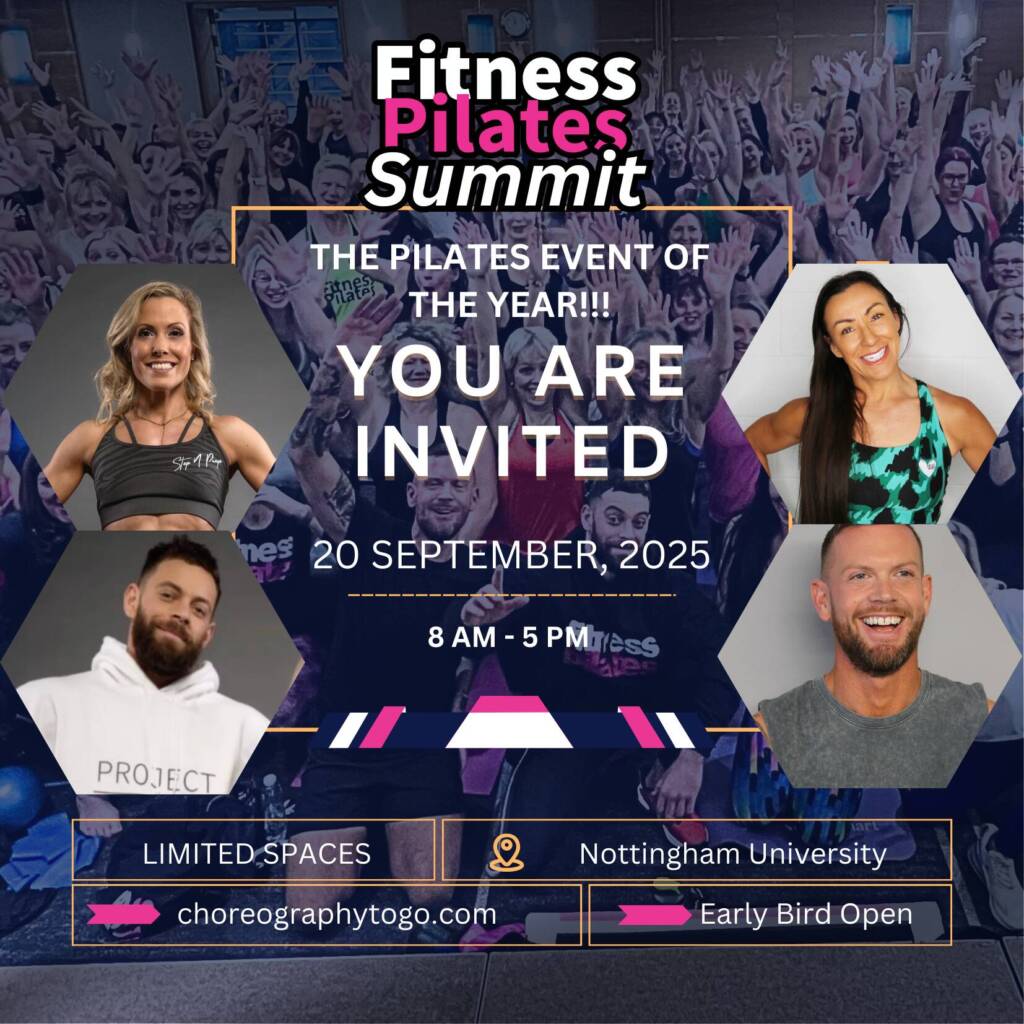
Fitness Pilates Summit – 10th Anniversary
I’ve just returned from the 10th Anniversary Fitness Pilates Summit, and it was our biggest and best event to date.
Instructors travelling from across England, Scotland, Wales and Ireland to join us in Nottingham.
The energy in the room was phenomenal. We shared an incredible programme of fresh ideas, education and inspiration, including:
- Fitness Pilates Sculpt
- Classical Fitness Pilates
- Minimal Movement
- Flow State
- Grip to Greatness with Jason
- Modern Classical, exploring how traditional Pilates exercises can be interpreted for today’s participants
- A fantastic finale with Kelly using dowels and bands
We loved every second and have so many pics and videos to share. SEE THE FULL GALLERY HERE
If you attended, all the class videos and replays are being uploaded to the dashboard – the files are massive so may take me a while.
If you missed this year’s Summit, I would 100% recommend booking for 2027. The Summit can form part of your CPD, and it is a brilliant opportunity to learn, network and spend time with other Fitness Pilates instructors.
Why not make a weekend of it in beautiful Nottingham? I highly recommend staying at the Orchard Hotel, located just a one-minute walk from the David Ross Sports Village.
We also did a pre con event on Friday teaching Hot FP & FP Reformer plus a masterclass and that really was awesome.


Does Pilates overload the muscles enough to build strength?
There has been a lot of discussion recently about Pilates and strength training. Does Pilates provide enough overload to strengthen muscles and build muscle tissue?
The answer is that it can—but the muscles must be challenged sufficiently, and the exercises need to progress over time.
In Fitness Pilates, we have always advocated a functional approach, using body weight, activation bands, long bands, infinity bands, mini balls and weights to increase resistance and encourage progressive overload.
But how do we weave strength training into a Pilates class while retaining the ethos and principles of Pilates?
The key is to maintain control, precision, alignment, concentration, breathing and quality of movement. We aren’t simply adding random gym exercises. We are applying the principles of Fitness Pilates to functional strength training.
Include a standing section
A standing section gives you an excellent opportunity to introduce weight-bearing and functional movements:
- Squats and squat variations
- Reverse and lateral lunges
- Split squats
- Hip hinges and deadlift patterns
- Calf raises
- Standing hip abduction
- Reaches, pulls and presses
- Sit-to-stands
These can begin with body weight before adding bands, dumbbells or a weighted ball.
Always include balance
Single-leg work strengthens the supporting muscles while improving balance, control and proprioception.
Try:
- Single-leg balances
- Knee lifts
- Clock reaches
- Single-leg hip hinges
- Standing leg extensions
- Heel raises
- Slow directional stepping
Place a mini ball beneath the forefoot or toes to provide sensory feedback and create an additional balance challenge. Always offer support when needed.
Use bands to create resistance
If weights aren’t available, bands are a practical way to increase load.
- Banded squats
- Lateral band walks
- Standing rows
- Chest presses
- Shoulder external rotation
- Biceps curls
- Triceps extensions
- Banded bridges
- Clams
- Side-lying leg presses
- Quadruped hip extensions
At the Fitness Pilates Summit, Kelly and Jason used dowels with resistance bands to create fantastic strength variations for traditional Pilates exercises. It worked brilliantly and demonstrated how simple equipment can transform familiar movement patterns.
Add weights thoughtfully
Weights can be incorporated while maintaining control and flow:
- Goblet squats
- Weighted lunges
- Dumbbell deadlifts
- Bent-over rows
- Shoulder presses
- Lateral raises
- Weighted bridges
- Chest presses
Choose a load that makes the final repetitions feel challenging without compromising alignment, breathing or technique.
Create progressive overload
Progressive overload doesn’t only mean using heavier weights. You can progress an exercise by:
- Increasing the resistance
- Adding repetitions
- Slowing the lowering phase
- Increasing the range of movement
- Changing from two limbs to one
- Increasing time under tension
- Reducing external support
- Combining strength with balance
- Progressing from the floor to standing
Change one variable at a time so participants can maintain excellent technique.
For many clients, their weekly Fitness Pilates class may be their only structured exercise session. A carefully planned class containing weight-bearing movement, resistance training, balance work and traditional Fitness Pilates exercises can make a meaningful difference to their strength, mobility and confidence.
We can retain everything that makes Pilates so effective while continuing to evolve our classes for the needs of today’s participants.
What do you think?
Have a fantastic week
Rachel
I love to hear from you 07976 268672
Business Help & Support
Join my Supporters Business Membership only £6.99 click here
Get the FREE Fitness Pilates newsletter straight to your inbox every Sunday click here
Choreography newsletter it also a free resource for fit pros sign up here
Join our Fitness Pilates VIP CLUB
See our Fitness Pilates Training Course Dates