


The Fitness Pilates Blog
Fitness Pilates & Osteoarthritis – Practical Teaching Guide
Welcome to the Fitness Pilates Newsletter
I hope you’re well and having a great week.
This week in the Fitness Pilates Newsletter, we’re revisiting a really important topic — osteoarthritis.
Osteoarthritis is incredibly common, and as Fitness Pilates instructors, we’re highly likely to have clients in our classes who are living with it, particularly in the knees, hips, hands and spine.
So this week we’re looking at:
- What osteoarthritis actually is
- Why movement and exercise are so important
- Which Fitness Pilates exercises can be particularly useful
- Exercises and movements that may need to be adapted or modified
- Strength, mobility and range of movement
- How to work around painful or stiff joints
- How we can help clients feel confident about moving rather than fearful of exercise
- Practical teaching and coaching ideas you can use immediately in your classes
Rather than thinking simply in terms of exercises that are “good” or “bad” for osteoarthritis, we’ll look at the individual, their symptoms, their current capacity and how we can modify and progressively load movement appropriately.
Music I’m using this week
I’m loving the new HORIZON release from Pure Energy. I’ve been using it in classes this week and it has such a great feel.
I’m also really enjoying LIIT 10 — brilliant for creating simple intervals and adding a different training dynamic to your sessions.
Fitness Pilates & Osteoarthritis – Practical Teaching Guide
Osteoarthritis (OA) is one of the conditions we are increasingly likely to see in our Fitness Pilates classes. Movement is not something people with osteoarthritis should automatically avoid. NICE identifies tailored therapeutic exercise, including local muscle strengthening and aerobic fitness, as a core treatment for osteoarthritis.
Here’s a practical guide you can save and use when planning your classes.
What is osteoarthritis?
- OA is a condition affecting the whole joint, not simply “wear and tear”.
- Changes can occur in cartilage, bone and surrounding joint tissues.
- Common symptoms include pain, stiffness and reduced range of movement.
- The knees, hips and small joints of the hands are particularly commonly affected. nhs.uk
- Symptoms can fluctuate — clients may have good days, more symptomatic days and flares.
- Avoid language such as “your joints are worn out” or suggesting that movement will cause further damage.
Exercise is important
- Regular exercise is one of the main approaches to managing OA.
- Strengthening the muscles supporting the affected joint can improve function.
- Regular movement can help maintain joint mobility.
- General cardiovascular fitness is also important.
- Exercise may initially cause some discomfort, particularly when somebody begins a new programme.
- NICE advises that regular, consistent exercise can ultimately reduce pain and improve function and quality of life. Nice
Fitness Pilates exercises to consider
For knee OA
- Sit-to-stand
- Supported squats
- Shallow squats progressing range gradually
- Heel raises
- Bridge variations
- Hip abduction
- Standing balance work
- Controlled knee flexion and extension
- Low-impact functional movements
For hip OA
- Bridges
- Hip extension
- Hip abduction
- Clam variations
- Supported squats
- Sit-to-stand
- Standing hip mobility
- Controlled functional movement
- Balance work
For spinal OA
- Gentle spinal mobility within a comfortable range
- Pelvic tilts
- Hip mobility
- Thoracic rotation
- Core stability exercises
- Glute strengthening
- Postural strength
- Functional movement patterns
Range-of-motion, strengthening and aerobic exercise can all form useful components of exercise for people with OA. Arthritis UK
What should we avoid?
There isn’t a universal list of “banned exercises” for osteoarthritis.
Instead, think:
MODIFY – ADAPT – PROGRESS
Be cautious with:
- Forcing end-range positions
- Deep flexion when it significantly increases symptoms
- High-impact exercise when the client isn’t conditioned for it
- Repeated movements that consistently aggravate symptoms
- Long periods of kneeling for somebody with painful knee OA
- Rapid changes of direction if balance or joint stability is compromised
- Heavy resistance before adequate strength and technique have been established
- Pushing through significant or escalating pain
An exercise that isn’t appropriate today isn’t necessarily an exercise that person can never perform.
Think RANGE before removing an exercise
If a client struggles with a squat, for example:
Instead of removing the squat completely:
Reduce the range → add support → slow the tempo → reduce repetitions → build strength → gradually increase range.
Fitness Pilates gives us so many opportunities to adapt exercises rather than simply saying, “You can’t do that because you’ve got arthritis.
Strength is KEY
One of our biggest priorities should be maintaining and developing muscular strength.
Think about strengthening:
- Glutes
- Quadriceps
- Hamstrings
- Calves
- Hip stabilisers
- Core
- Postural muscles
The stronger the supporting musculature and the better someone’s overall physical capacity, the more options they may have for everyday movement.
The NHS recommends regular exercise combining muscle strengthening and general fitness for people with osteoarthritis. nhs.uk
Mobility matters too
Include regular:
- Hip mobility
- Knee flexion and extension
- Ankle mobility
- Thoracic mobility
- Gentle spinal movement
- Shoulder mobility
- Functional movement through comfortable ranges
Encourage comfortable movement rather than forcing flexibility.
During an OA flare
You don’t necessarily have to stop all movement.
Consider:
- Reducing intensity
- Reducing resistance
- Reducing range
- Fewer repetitions
- Changing position
- Using more supported exercises
- Gentle mobility
- Allowing additional recovery
And remember that OA symptoms can fluctuate considerably.
Please feel free to share with clients and pease let me know if this is helpful.
Rachel
I love to hear from you 07976 268672
Business Help & Support
Join my Supporters Business Membership only £6.99 click here
Level 3 Pilates Course Dates on ZOOM (YMCA)
- 9 / 10 / 11 October 2026
- 6 / 7 / 8 November 2026
- 11 / 12 / 13 December 2026
LEVEL 3 REFORMER QUALIFICATION (YMCA)
- 23 October 2026 1 space
- 27 November 2026
- 15 December 2026
Fitness Pilates Reformer Teacher Training Course
BRISTOL 8th October Riverside leisure
Business Help & Support
Join my Supporters Business Membership only £6.99 click here
Get the FREE Fitness Pilates newsletter straight to your inbox every Sunday click here
Choreography newsletter it also a free resource for fit pros sign up here
Join our Fitness Pilates VIP CLUB
See our Fitness Pilates Training Course Dates
Share this post:
Latest Fitness Pilates Courses & Classes

Fitness Pilates Sculpt Masterclass
£15.00 Original price was: £15.00.£12.00Current price is: £12.00.

Fitness Pilates Summit Event 2027 EARLY BIRD TICKETS
£127.00 Original price was: £127.00.£99.00Current price is: £99.00.

Fitness Pilates For Padel 90 minute Workshop For Pilates Teachers
£57.00 Original price was: £57.00.£47.00Current price is: £47.00.


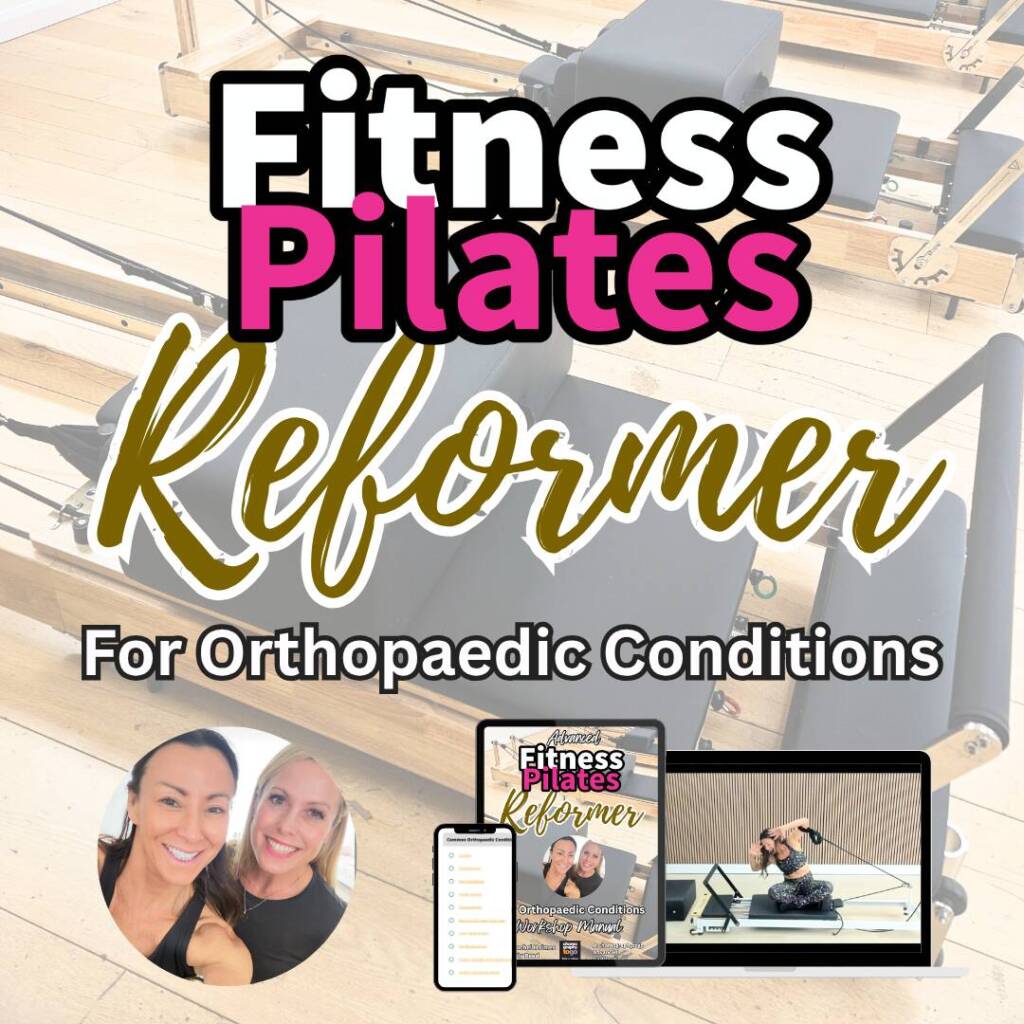
Reformer For Orthopaedic Conditions Workshop
£199.00 Original price was: £199.00.£127.00Current price is: £127.00.



The latest Fitness Pilates blogs & news


Join the Fitness Pilates newsletter
A short description introducing your business and the services to visitors.