


The Fitness Pilates Blog
Hip Replacements and Fitness Pilates: What Every Instructor Needs to Know in 2026
Summer Solstice
Hip Replacements and Fitness Pilates: What Every Instructor Needs to Know in 2026
As part of our ongoing series looking at common orthopaedic conditions, this week I wanted to focus on hip replacements as I am seeing an increasingly number of clients coming to FP and Reformer every week having had a hip replacement.
Music
Pure Energy have released some fantastic new music this week. If you’re an app user, have you tried:
• Feel Good Flow – I used this for the Mini Ball Masterclass on Friday and it worked beautifully.
• Glow Up Reformer – A stunning album and perfect for Pilates, mobility and mindful movement sessions.
• Hot Sculpt & Stretch – Another excellent release with a great mix of energy and flow.
Mini Ball Masterclass
Over 60 Fitness Pilates teachers signed up for Friday’s Mini Ball Masterclass, which was fantastic to see.
The overwhelming feedback was how much content we covered in just 60 minutes and requests for even more masterclasses/workshops like this. If you missed it, don’t worry – the replay is now available on the dashboard.
Bristol Fitness Pilates Reformer Course
Due to changes at the original venue, I have moved this course to Nuffield Health Gloucester on 7th August.
Full details are below if you’d like to join us.
Summer Solstice Classes
Are you running a Summer Solstice class this weekend?
I’ve taken the Reformers outside and held a wonderful Friday evening session. I’m also teaching another outdoor class tonight at 7.30pm and can’t wait. The weather forecast looks perfect, and there’s something really special about moving, stretching and strengthening outdoors on the longest days of the year.
Hip Replacement
The great news is that hip replacement surgery and rehabilitation have evolved significantly over the last decade. Many of the traditional restrictions we were taught are no longer applied in the same way, and modern rehabilitation is far more focused on helping people return to normal movement patterns, exercise and everyday activities.
Hip Replacements Are Changing
Many instructors still think of hip replacement clients as being fragile or heavily restricted. In reality, modern hip replacement surgery is designed to get people moving again.
The most common procedures being performed today include:
Total Hip Replacement (THR)
The most common type of surgery where both the ball and socket of the hip joint are replaced.
Anterior Hip Replacement
A newer approach that accesses the hip from the front of the body.
Benefits often include:
- Less muscle disruption
- Faster recovery
- Reduced risk of dislocation
- Earlier return to activity
Posterior Hip Replacement
Still widely used and accessed from the back of the hip.
Historically this group had more movement precautions, although many surgeons now take a more progressive approach once healing is complete.
Lateral Hip Replacement
Accessed from the side of the hip.
These clients often require additional work on:
- Glute strength
- Balance
- Single-leg stability
Hip Resurfacing
Often performed on younger and more active individuals. These clients frequently return to a very high level of activity after rehabilitation.
Revision Hip Replacement
A replacement of a previous hip replacement which may require a slower and more cautious return to exercise.
The Old Rules Are Changing
For many years we were taught to avoid:
- Crossing the legs
- Bending the hip beyond 90 degrees
- Internal rotation
- Twisting movements
Whilst these precautions may still be important during the early stages of recovery, many surgeons and physiotherapists are now encouraging a gradual return to normal movement patterns once healing is complete.
Rather than focusing on blanket restrictions, current best practice is to assess the individual sitting in front of you.
Questions Every Instructor Should Ask
Before teaching a client with a hip replacement, find out:
- When was the surgery?
- Which hip was replaced?
- What type of surgery was performed?
- Have they completed physiotherapy?
- Are there any ongoing restrictions?
- What activities are they currently doing?
- What movements feel uncomfortable?
- What are their goals?
What Challenges Do We Commonly See?
In Fitness Pilates classes, the most common issues are:
- Glute weakness
- Reduced balance
- Fear of movement
- Reduced single-leg stability
- Hip flexor tightness
- Compensatory movement patterns
- Reduced confidence
Many clients have become deconditioned before surgery due to pain and reduced activity levels, making strength and balance work particularly important.
How Fitness Pilates Can Help
Fitness Pilates is an excellent modality for clients following hip replacement surgery because it focuses on controlled movement, alignment, strength, mobility and confidence.
Benefits can include:
- Improved hip stability
- Better balance and coordination
- Increased glute strength
- Improved posture
- Enhanced gait mechanics
- Greater confidence with movement
- Improved overall quality of life
Recommended Fitness Pilates Exercises
Some excellent choices include:
- Pelvic tilts
- Hip rolls
- Bridge variations
- Glute strengthening exercises
- Dead Bug progressions
- Four-point kneeling stability work
- Standing balance exercises
- Heel raises
- Sit-to-stand movements
- Functional squat patterns
- Gentle lunge progressions
- Controlled side-lying leg work
Exercises to Approach with Caution
Depending on the individual and stage of recovery, consider modifying:
- Roll Up
- Teaser
- Deep seated hip stretches
- Aggressive hip-opening stretches
- Loaded twisting movements
- High-level rotational exercises
- Deep hip flexion positions
Remember that movement quality is always more important than range of movement.
Respect the individual rather than the replacement.
Modern hip replacement clients are often capable of far more than we once believed. With appropriate progression, good coaching and sensible modifications, many people can return to Pilates, strength training, walking, golf, tennis, hiking and a highly active lifestyle.
As Fitness Pilates instructors, we are perfectly positioned to help clients rebuild strength, confidence and movement quality following hip replacement surgery.
Have a fantastic week and whats app me with feedback or questions
I love to hear from you 07976 268672
Rachel Holmes
Rachel Holmes
COURSE UPDATES
Level 3 Pilates Course Dates on ZOOM
- 17 / 18 / 19 July 2026
- 7 / 8 / 9 August 2026
- 11 / 12 / 13 September 2026
- 9 / 10 / 11 October 2026
- 6 / 7 / 8 November 2026
- 11 / 12 / 13 December 2026
LEVEL 3 REFORMER QUALIFICATION (YMCA)
Face-to-Face (C2GO Studio NG16 4HA)
- 25 June 2026
- 21 July 2026
- 21 August 2026
- 25 September 2026
- 23 October 2026
- 27 November 2026
- 15 December 2026
Fitness Pilates Reformer Teacher Training Course
- 26th June Nottingham Studio
- 7th August GLOUCESTER Nuffield
Share this post:
Latest Fitness Pilates Courses & Classes

Fitness Pilates Summit Event 2027 EARLY BIRD TICKETS
£127.00 Original price was: £127.00.£99.00Current price is: £99.00.


Reformer For Orthopaedic Conditions Workshop
£199.00 Original price was: £199.00.£127.00Current price is: £127.00.
Creative Reformer Classes – Online Workshop
£75.00 Original price was: £75.00.£60.00Current price is: £60.00.
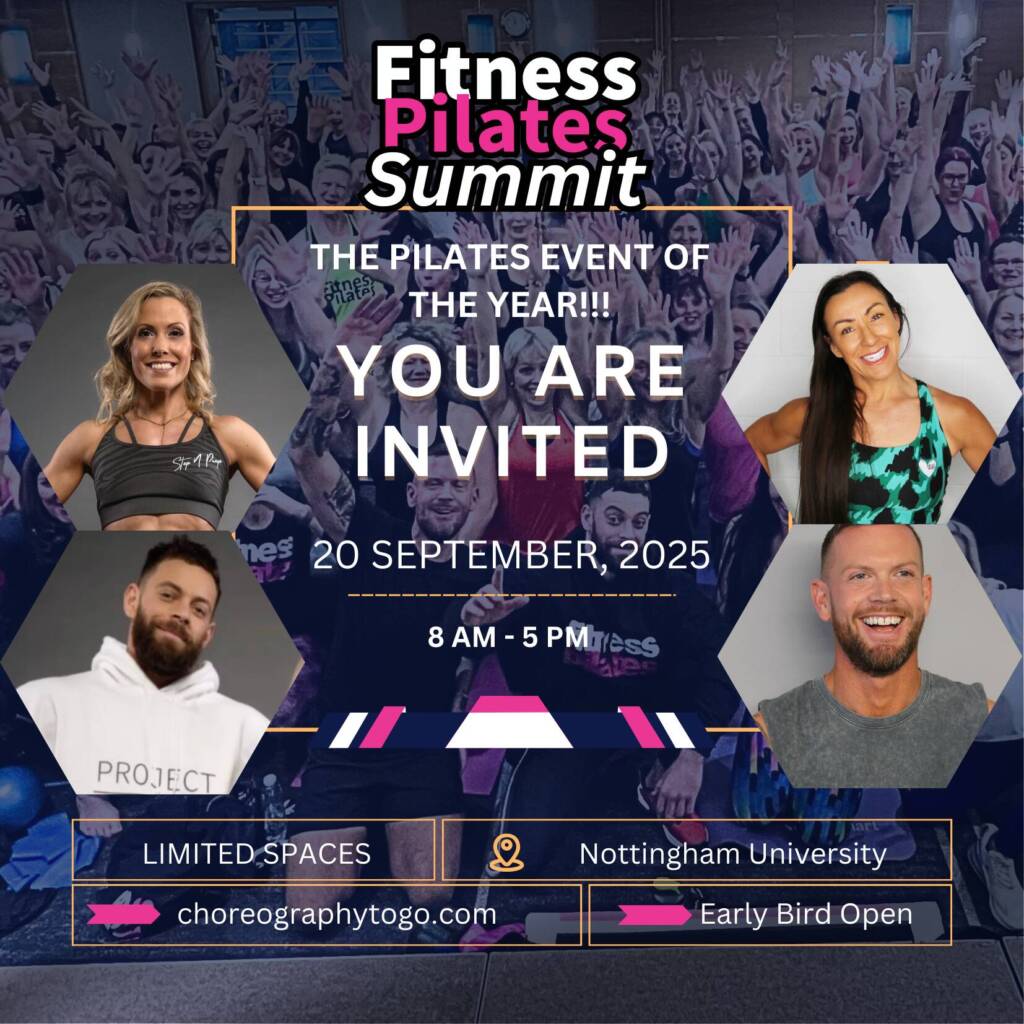
Fitness Pilates Summit Event 2026 EARLY BIRD TICKETS
£127.00 Original price was: £127.00.£99.00Current price is: £99.00.

The latest Fitness Pilates blogs & news


Join the Fitness Pilates newsletter
A short description introducing your business and the services to visitors.