


The Fitness Pilates Blog
Polymyalgia rheumatica (PMR) Fitness Pilates News
I hope you’ve had a fantastic week….even though iits been a hot and sweaty week!
One condition I don’t think we’ve covered before in the newsletter is polymyalgia rheumatica (PMR). I asked in the Fitness Pilates Facebook group this week which orthopaedic and health conditions you are seeing most often in your classes, and PMR came up time and time again.
Training Update
We had a fantastic few days delivering both the Level 3 Reformer Qualification followed immediately by the Fitness Pilates Reformer Certification.
It was incredibly hot, but everyone worked so hard and the atmosphere was brilliant. Congratulations to everyone who attended – it was lovely spending time with you all and seeing your confidence grow throughout the training.
Music I’m Loving This Week
If you’re using the Pure Energy Music app, here are a few albums I’ve been enjoying recently:
- Glow Up
- Feel Good Flow
- Songs for Savasana
There are also lots of new mind-body albums available, including beautiful peaceful piano tracks, relaxing instrumental music and track-by-track playlists that work perfectly for Fitness Pilates, stretching, breathwork and relaxation.
Have a listen and let me know which ones become your favourites.
Have You Booked Your Summit Place?
The Fitness Pilates Summit is getting close, and we now only have a handful of places remaining.
There are still spaces available on the pre-convention workshops, including:
- HOT Fitness Pilates
- Fitness Pilates Reformer
Polymyalgia rheumatica (PMR) is an inflammatory condition that causes pain, stiffness and reduced mobility, particularly in the shoulders, neck and hips. It mainly affects people over the age of 50 and is one of the more common inflammatory conditions you may come across in Fitness Pilates classes.
Symptoms
The most common symptoms include:
- Severe stiffness first thing in the morning (often lasting more than 45 minutes)
- Pain and aching in both shoulders
- Hip pain and stiffness
- Neck pain
- Upper arm and thigh discomfort
- Difficulty getting out of bed or rising from a chair
- Fatigue
- Feeling generally unwell
- Occasionally a mild fever or weight loss
Many people describe it as feeling as though they’ve “aged overnight”.
What causes it?
The exact cause isn’t known, but it is thought to involve the immune system and inflammation. It isn’t caused by exercise or injury.
PMR is closely linked with Giant cell arteritis, a condition that affects blood vessels. Around 10–20% of people with PMR develop giant cell arteritis, which requires urgent medical attention.
Who gets it?
PMR is most common in:
- Adults over 50 (especially over 65)
- Women (around two to three times more often than men)
- People of Northern European ancestry
Treatment
Most people are treated with:
- Low-dose corticosteroids (usually Prednisolone)
- Gradual reduction of medication over months or sometimes years
- Regular monitoring by their GP or rheumatology team
Symptoms often improve dramatically within a few days of starting treatment.
Fitness Pilates considerations
Once someone has been medically cleared to exercise, Fitness Pilates can be very beneficial.
Focus on:
- Gentle mobility work
- Gradual improvements in shoulder and hip range of motion
- Postural exercises
- Core stability
- Functional strength
- Balance training
- Breathing and relaxation
Be mindful that:
- Morning classes may be more difficult because stiffness is often worst early in the day.
- Flare-ups can happen, so encourage participants to work within a comfortable range.
- Fatigue may vary from day to day.
- Long-term steroid use can reduce bone density and muscle strength, so progressive strength work (within their ability) is particularly valuable.
Exercises that often work well
- Pelvic tilts
- Shoulder rolls
- Thoracic mobility
- Cat–cow
- Hip circles
- Bridge progressions
- Bird dog
- Standing balance work
- Sit-to-stand practice
- Controlled arm raises
When to advise medical review
If a participant with PMR develops any of the following, they should seek urgent medical advice:
- A new severe headache
- Jaw pain when chewing
- Sudden changes in vision (blurred or double vision, or vision loss)
- Scalp tenderness
These can be signs of giant cell arteritis and require immediate assessment.
Key takeaway for instructors
PMR responds well to appropriately adapted exercise. Your aim is not to “push through” stiffness, but to help participants move comfortably, maintain strength and mobility, and rebuild confidence in their movement as part of their overall management plan.
Have a fantastic week and whats app me with feedback or questions
I love to hear from you 07976 268672
Rachel Holmes
Rachel Holmes
COURSE UPDATES
Level 3 Pilates Course Dates on ZOOM
- 17 / 18 / 19 July 2026
- 7 / 8 / 9 August 2026
- 11 / 12 / 13 September 2026
- 9 / 10 / 11 October 2026
- 6 / 7 / 8 November 2026
- 11 / 12 / 13 December 2026
LEVEL 3 REFORMER QUALIFICATION (YMCA)
Face-to-Face (C2GO Studio NG16 4HA)
- 21 July 2026
- 21 August 2026
- 25 September 2026
- 23 October 2026
- 27 November 2026
- 15 December 2026
Fitness Pilates Reformer Teacher Training Course
- 30th July Fitness Pilates Reformer ONLINE
- 7th August GLOUCESTER Nuffield
COURSE UPDATES
CHOREOGRAPHY Newsletter – I have been adding lots of mini ball flows, shoulder bridge variations and mini workshops to my Choreography newsletter its a free resource for fit pros sign up here
Join our Fitness Pilates VIP CLUB
Join our FREE Fitness Pilates Newsletter
See our Fitness Pilates Training Course Dates
Share this post:
Latest Fitness Pilates Courses & Classes

Fitness Pilates Summit Event 2027 EARLY BIRD TICKETS
£127.00 Original price was: £127.00.£99.00Current price is: £99.00.


Reformer For Orthopaedic Conditions Workshop
£199.00 Original price was: £199.00.£127.00Current price is: £127.00.
Creative Reformer Classes – Online Workshop
£75.00 Original price was: £75.00.£60.00Current price is: £60.00.
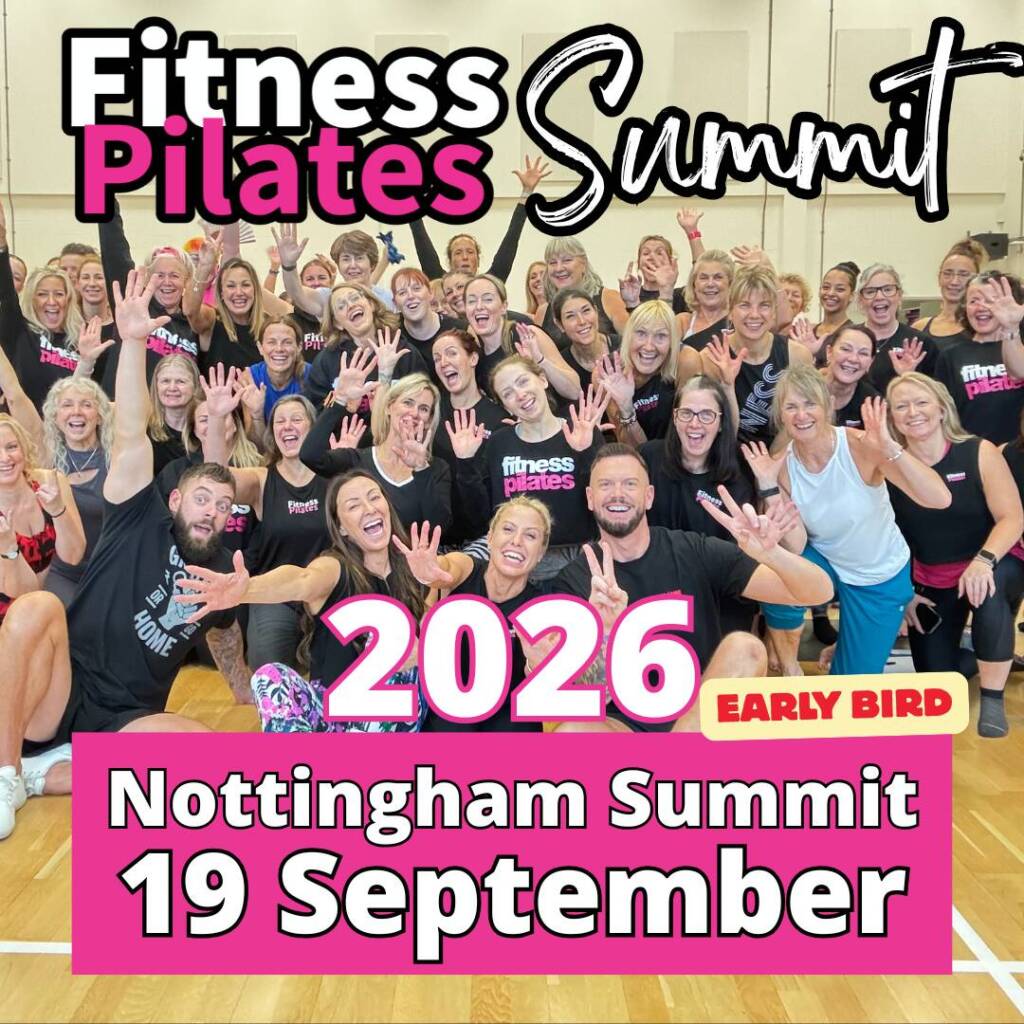
Fitness Pilates Summit Event 2026 EARLY BIRD TICKETS
£127.00 Original price was: £127.00.£99.00Current price is: £99.00.



The latest Fitness Pilates blogs & news



Join the Fitness Pilates newsletter
A short description introducing your business and the services to visitors.