


The Fitness Pilates Blog
Hysterectomy and Fitness Pilates do’s and dont’s
I hope you’re all having a great weekend.
Wow It has been a busy week I travelled to Gloucester to deliver Reformer training, Friday I presented Hot FP and Saturday a Step Masterclass so looking forward to a nice rest today!
Thank you so much to everyone who commented on last week’s newsletter — I was honestly shocked by how many messages I received from people saying they have this condition. It’s clearly incredibly common, and I’m still working my way through all your messages.
This week, I felt it would be really timely to talk about hysterectomy, especially as our amazing tutor Kelly has recently undergone this surgery and is kindly sharing her experience.
How common is a hysterectomy in the UK?
Around 55,000 hysterectomies are performed in the UK each year, making it one of the more common gynaecological operations.
Between 30,000 and 40,000 of these procedures take place annually on the NHS, mainly in women aged 40–50.
It’s estimated that about 1 in 5 women in the UK will have a hysterectomy at some point in their life
These surgeries are usually carried out when other treatments (e.g., for heavy bleeding, fibroids, endometriosis or pelvic pain) haven’t been effective.
Quick context
- Hysterectomy rates have decreased over time in the NHS as less invasive alternatives (like intrauterine systems or endometrial treatments) have become available. (Wikipedia)
- It remains more common among women in their 40s and 50s than at younger age
Types of Hysterectomy (and what they mean for movement)
Total hysterectomy
What’s removed:
- Uterus
- Cervix
(Ovaries may or may not be removed)
Most common type
Implications for Pilates:
- Pelvic floor support still required
- Vaginal cuff healing is a key consideration
- Increased sensitivity to intra-abdominal pressure early on
- Gradual return to core loading essential
Pilates focus: breath, coordination, pressure management
Subtotal / Partial hysterectomy
What’s removed:
- Uterus
- Cervix remains
Implications for Pilates:
- Pelvic floor still intact but altered
- Some women feel more “stable” early on, but healing rules still apply
- Core and pelvic floor retraining still needed
Pilates focus: same care as total hysterectomy — don’t rush
Radical hysterectomy
What’s removed:
- Uterus
- Cervix
- Upper vagina
- Supporting ligaments
(often for cancer treatment)
Implications for Pilates:
- Significant pelvic support changes
- Higher risk of pelvic floor dysfunction
- Longer recovery timeline
- Often combined with radiation or chemotherapy
Pilates focus: highly individual, slow, rehab-style progression
Often best with pelvic health physio involvement
Ovaries: a BIG distinction
Hysterectomy with ovaries preserved
- Hormones continue naturally
- No immediate surgical menopause
- Still hormonal shifts due to surgery stress
Movement tolerance usually better long-term, but recovery still matters.
Hysterectomy with oophorectomy (ovaries removed)
- Immediate surgical menopause
- Sudden drop in oestrogen
Implications:
- Increased fatigue
- Joint stiffness
- Muscle loss risk
- Bone density concerns
- Temperature regulation issues
Pilates focus:
- Strength for bones and joints
- Recovery time
- Temperature awareness
- Nervous system regulation
Surgical approach (this affects recovery speed)
Abdominal hysterectomy
- Large incision (often bikini or vertical)
Implications:
- Longer healing time
- Greater scar and fascial involvement
- Core reconnection takes longer
Pilates: slower return, scar-aware work essential
Laparoscopic (keyhole)
- Small incisions in abdomen
Implications:
- Faster recovery than abdominal
- Still deep internal healing
- Easy to underestimate recovery needs
Pilates: don’t be fooled by “small scars”
Vaginal hysterectomy
- No abdominal incision
Implications:
- Quicker surface healing
- Pelvic floor still heavily affected
- Vaginal cuff healing crucial
Pilates: pelvic floor coordination still priority
Why this matters in Fitness Pilates
Two clients may both say:
“I’ve had a hysterectomy”
…but have completely different needs depending on:
- What was removed
- How it was removed
- How long ago
- Hormonal impact
- Complications
Key questions teachers should ask (or encourage clients to reflect on)
- How long ago was your surgery?
- Was it abdominal, laparoscopic, or vaginal?
- Were your ovaries removed?
- Do you experience pelvic heaviness, pain, or fatigue?
Red flags (always refer)
- Pelvic heaviness or dragging
- Incontinence
- Pain at the scar or deep pelvis
- Abdominal bulging
- Persistent fatigue or flare-ups
Not all hysterectomies are the same — recovery, hormones, and pelvic support all matter.
DOs in Fitness Pilates classes
1. Respect healing timelines
Always check:
- How long post-surgery
- Type of hysterectomy
- Medical clearance (especially before load or impact)
2. Start with breath and nervous system regulation
Early and ongoing priorities:
- Diaphragmatic breathing
- Gentle rib mobility
- Parasympathetic (calming) work
Breath supports:
- Scar healing
- Pelvic floor coordination
- Core reconnection
3. Cue gentle core support, not bracing
Use language like:
- “Wrap and support”
- “Gentle lift”
- “Support without gripping”
The aim is coordination, not strength early on.
4. Use supported positions first
Best early choices:
- Supine with head/torso support
- Side-lying with cushions
- Seated work
- Quadruped (later, if comfortable)
These reduce pressure through the pelvic floor and scar.
DON’Ts in Fitness Pilates classes
1. Don’t rush core or pelvic floor loading
Avoid early:
- Planks
- Strong curl-ups
- Roll-ups
- Double leg lifts
- Aggressive rotational work
Healing tissues need time.
2. Don’t increase intra-abdominal pressure early
Avoid:
- Breath holding
- Strong bracing
- Heavy resistance
- Long lever movements
Pressure management is key post-surgery.
3. Don’t assume “no uterus = no pelvic floor issues”
Even without a uterus:
- Pelvic floor still needs support
- Prolapse risk can still exist
- Coordination matters more than strength
4. Don’t overstretch scars or fascia
Avoid:
- Long static stretches
- Aggressive spinal extension or flexion early
- Forcing end ranges
Scar tissue responds best to gentle, progressive movement.
5. Don’t ignore red flags
Stop and refer if clients report:
- Pelvic heaviness or dragging
- New incontinence
- Pain at the scar
- Bulging around the abdomen
- Persistent fatigue or pain flare-ups
What works especially well
Breath-led Pilates
Slow, controlled mat work
Side-lying and seated sequences
Gentle mobility + stability
Short, frequent sessions
Long-term progressive strength
Feel free to use this information in your own Fitness Pilates info and I really hope they are helpful.
Everyday we strive to be better teachers.
Have a wonderful day,
Rachel
Whats app 07976 268672
I have been filming a weekly vlog on Youtube as an experiment check it out here https://www.youtube.com/watch?v=iPEMqiNz3Hg
Coming up this month…
Both Level 3 Pilates Mat & Level 3 Reformer courses are full in Feb, but there are limited spaces in March & April
I’m travelling to Nuffield Gloucester this week to deliver Fitness Pilates reformer which is full so we’ve added another course on 5th March which only has a few spaces left.
2 spaces for this weeks 12th February Fitness Pilates Reformer course.
Resources
If you’d like support with marketing, sales, social media, and business growth, you’re very welcome to join my Supporters Group.
Click here to find out more.
Join the FPVIP CLUB click here
TRAIN TO TEACH
Train to teach Fitness Pilates see our next dates here
Train to teach Level 3 Pilates ( no previous qualifications needed) click here
Train to teach Fitness Pilates reformer learn more
Train to teach Level 3 Reformer learn more
Train to teach HOT Fitness Pilates 9th January
UPDATE YOUR CPD
NEED TO UPDATE YOUR CPD? See our list of CPD courses for Fitness Pilates instructors
FREE RESOURCES FOR FITPROS
FREE Choreography newsletter for class content and class plans
FREE Fitness Pilates Newsletter class plans, managing health conditions in a Pilates class.
The Reformer Newsletter – Class plans and music ideas for Teachers interested in Reformer.
Business Newsletter – This weeks I give you a step by step into creating an online course.
Share this post:
Latest Fitness Pilates Courses & Classes
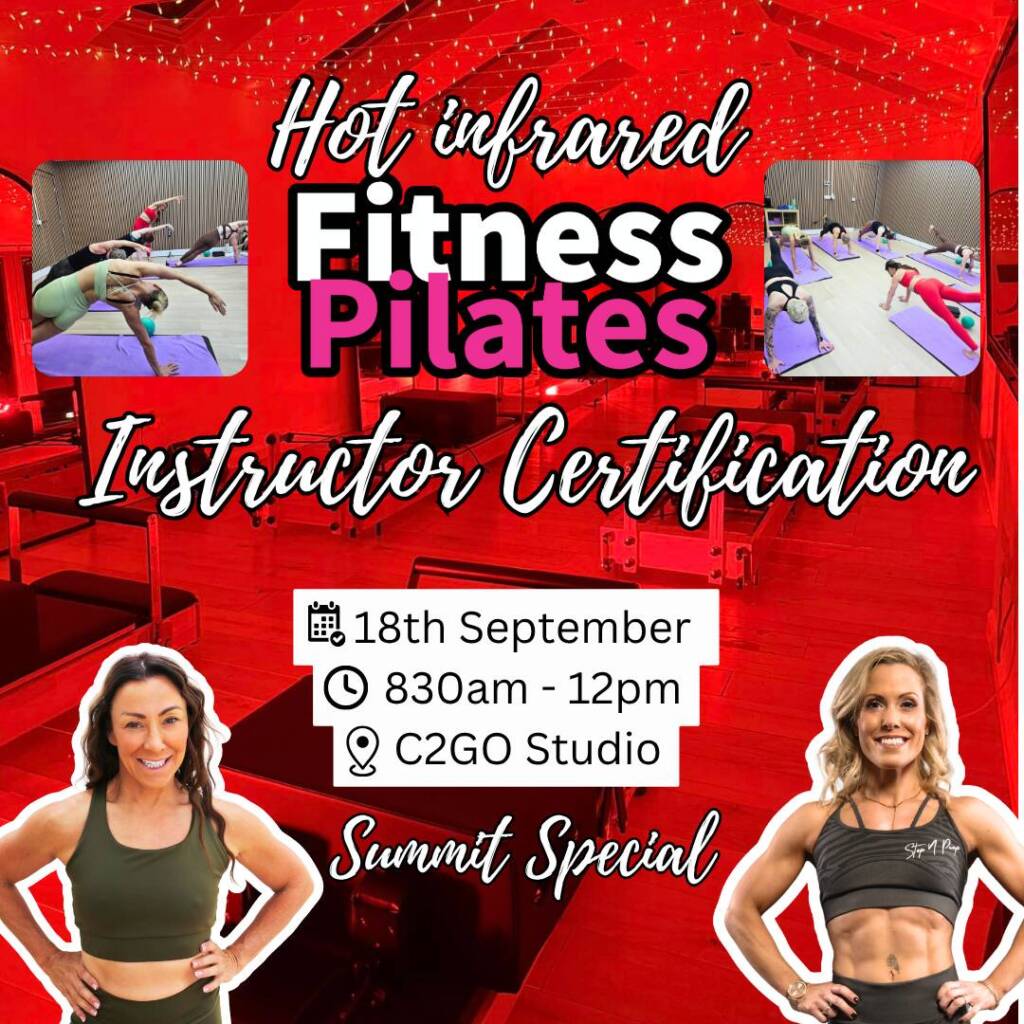
HOT Redlight Fitness Pilates — Instructor Certification SUMMIT SPECIAL 18th SEPTEMBER 830 – 12
£547.00 Original price was: £547.00.£500.00Current price is: £500.00.
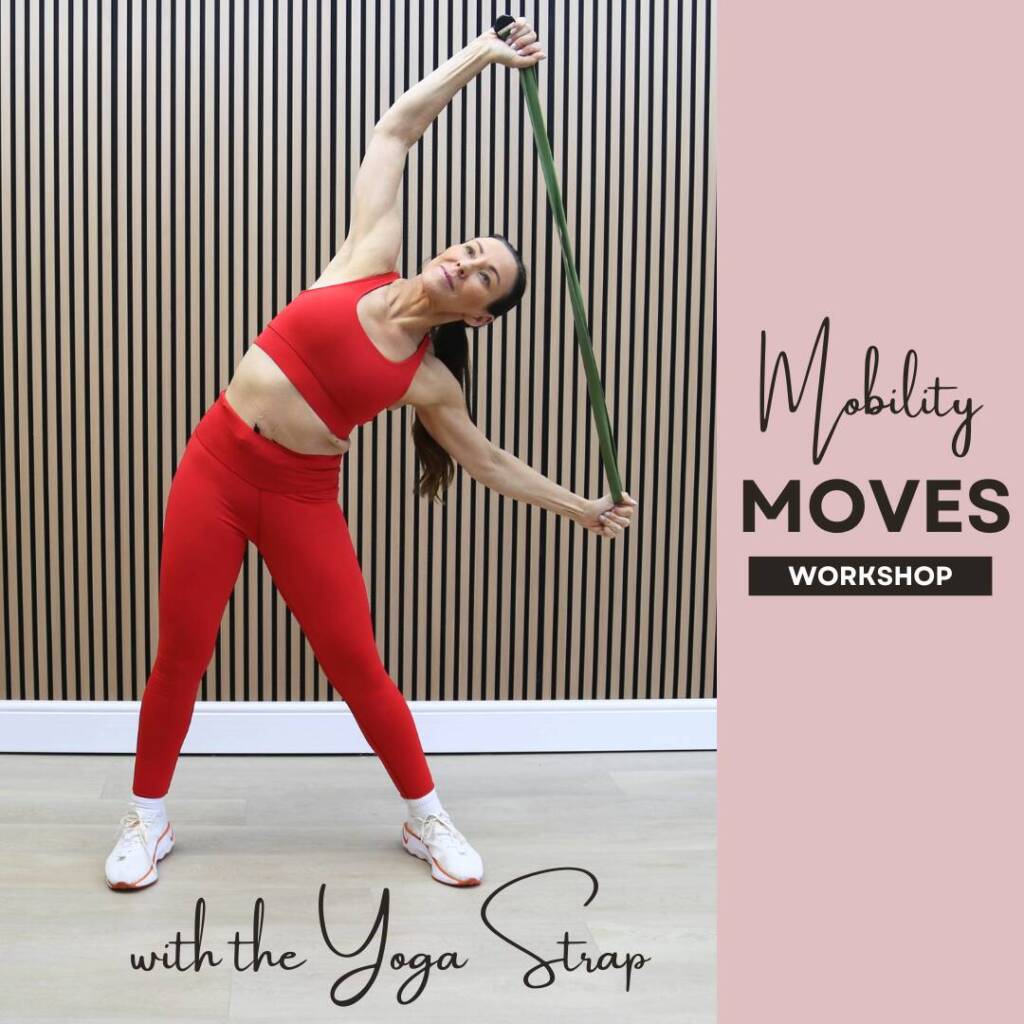
Mobility Moves with the Yoga Strap Workshop
£67.00 Original price was: £67.00.£47.00Current price is: £47.00.
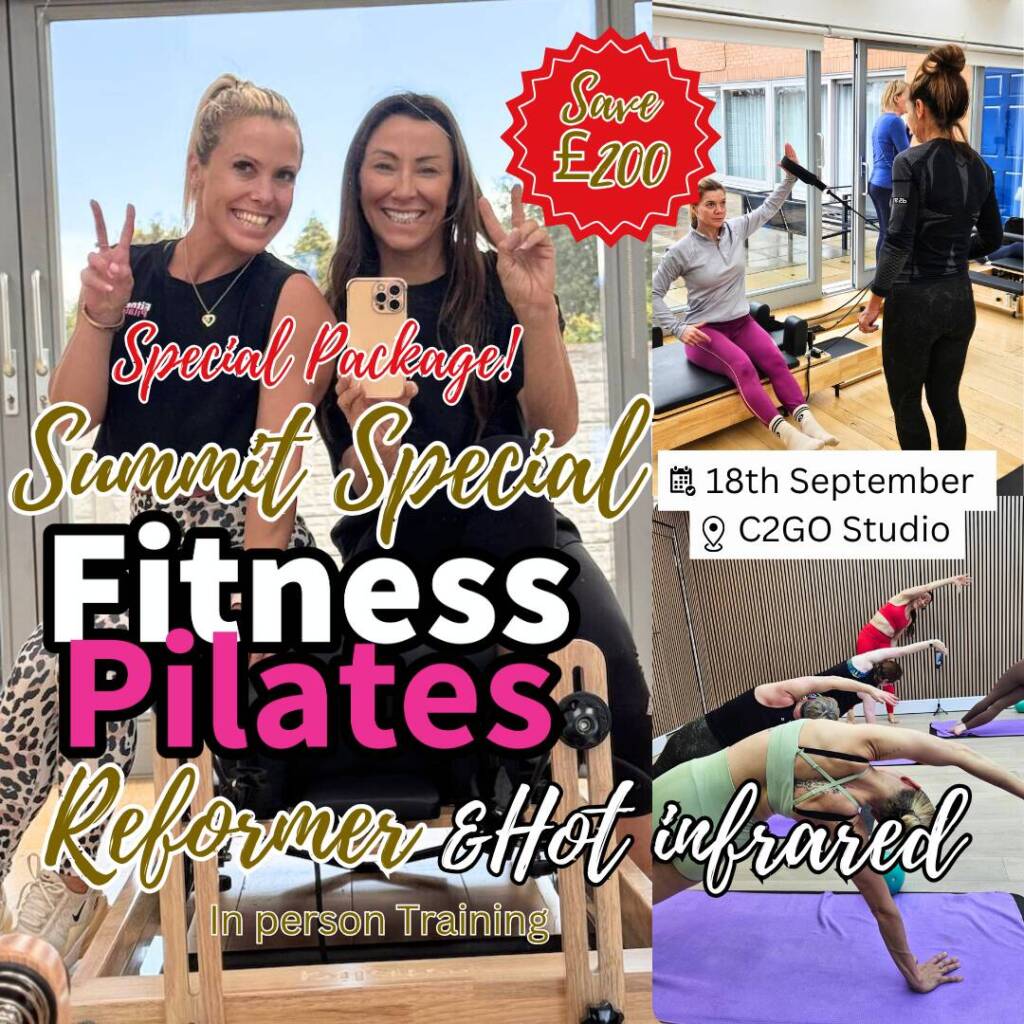
Reformer Fitness Pilates + Hot Fitness Pilates Instructor Certification Live PACKAGE SUMMIT SPECIAL 18th SEPTEMBER
£1,094.00 Original price was: £1,094.00.£799.00Current price is: £799.00.
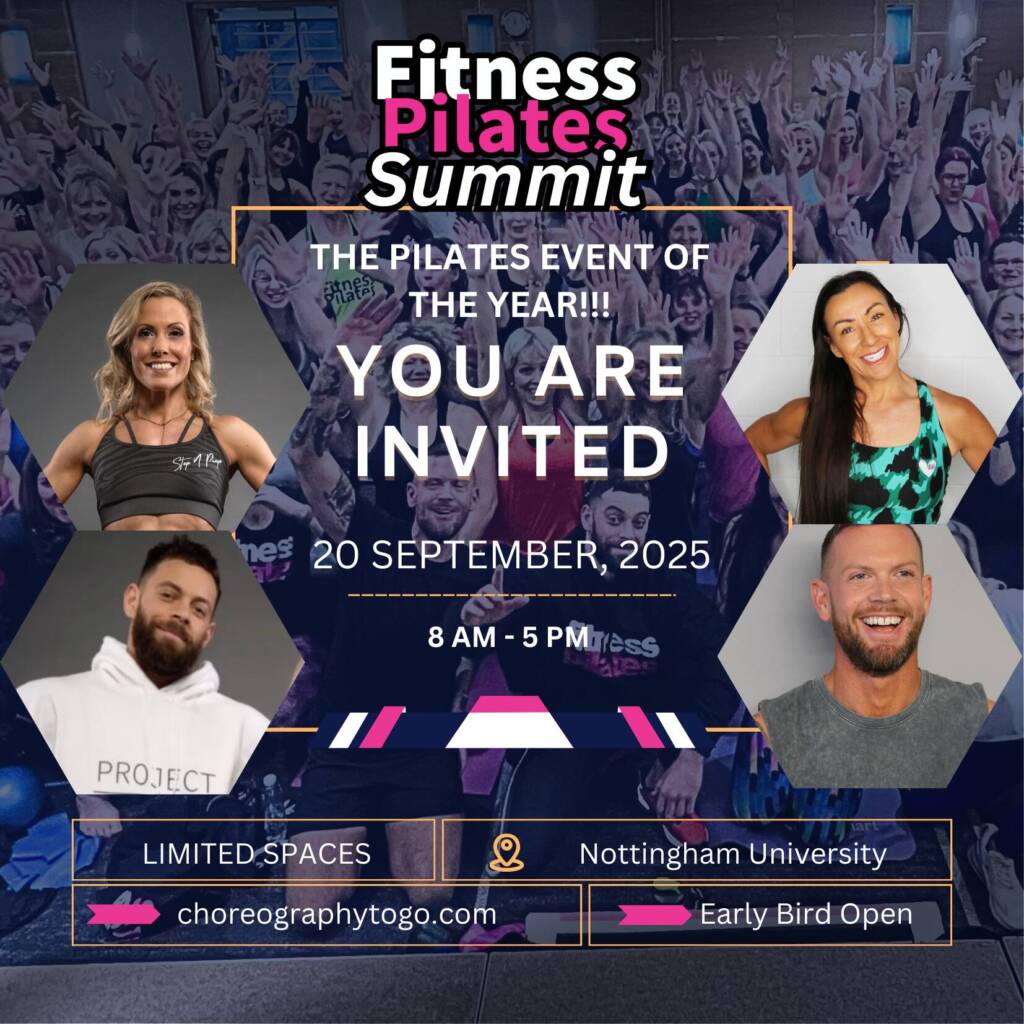

The latest Fitness Pilates blogs & news
Join the Fitness Pilates newsletter
A short description introducing your business and the services to visitors.