

If you’re slowing down as Christmas approaches, thats awesome, classes and courses are busier than ever. We’re fitting in lots of courses before the festive break, as many learners are keen to qualify now so they can launch new classes in the New Year.
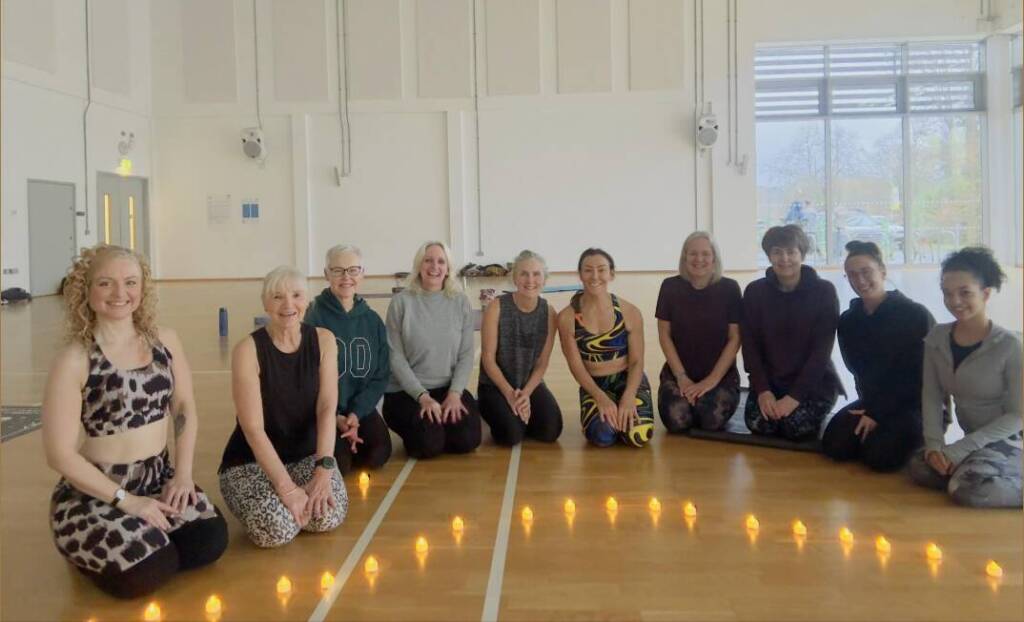
This week we’ve delivered Fitness Pilates Reformer both online and in person with an amazing group of learners, launched Pilates Escape — a wellbeing evening combining HOT Fitness Pilates and Reformer Pilates — and hosted the first candlelight Fitness Pilates class of the season.
Throughout the year, this newsletter has focused on sharing straightforward, practical health condition information that you can share with your members. We’ve looked at common conditions many of our class members are managing, explored which Fitness Pilates exercises to avoid, and highlighted safer, more effective alternatives.
I’d genuinely love to know if this has been helpful for you. I’ve really enjoyed researching and creating simple, comprehensive articles, so please do let me know if this content has supported your teaching.
I’m always inspired when I speak to class members and hear about their health conditions, and these real conversations often shape our newsletter topics. This week, prolapse and hernia have both come up, so we’ll be focusing on prolapse in this issue.
Candlelight Class MUSIC
If you’re planning candlelight or restorative sessions, the Pure Energy Music – Intention Range and their Sound Baths are absolutely beautiful. One of my personal favourites is Restorative Nature, and Surya Soul is also stunning and works perfectly for calm, grounding classes.
What is a prolapse?
A pelvic organ prolapse (POP) happens when one (or more) of the pelvic organs drop down because the pelvic floor muscles, fascia and connective tissues are not providing enough support.
Organs that can prolapse:
- Bladder (cystocele)
- Uterus (uterine prolapse)
- Bowel/rectum (rectocele)
- Small intestine (enterocele)
- Or a combination
Levels (grades) of prolapse
Prolapse is commonly graded Stage 1–4 based on how far the organ has descended.
Stage 1 – Mild
- Slight descent
- Often asymptomatic
- Usually discovered during a routine examination
Stage 2 – Moderate
- Organ drops to the vaginal opening
- Symptoms usually start to appear
Stage 3 – Advanced
- Organ protrudes outside the vaginal opening
- Symptoms are noticeable and often limiting
Stage 4 – Severe
- Organ is fully outside the vagina
- Significant symptoms and functional impact
How common is prolapse?
Prolapse is very common, but often under-discussed.
- Up to 50% of women who have given birth show some degree of prolapse on examination
- Around 10–20% experience noticeable symptoms
- About 1 in 8 women will require treatment or surgery in their lifetime.
It affects:
- Post-pregnancy women
- Peri- and post-menopausal women
- Women with chronic coughing, constipation or heavy lifting histories
- Women with connective tissue weakness or hypermobility
How does prolapse show up? (key symptoms)
Symptoms vary day to day and often worsen:
- At the end of the day
- With fatigue
- With impact or heavy lifting
Common signs:
- Heaviness or dragging sensation in the pelvis
- Feeling of “something coming down”
- Vaginal bulge or pressure
- Difficulty emptying bladder or bowel
- Lower back or pelvic ache
- Symptoms improving when lying down
What does this mean for FP teachers?
Pilates is one of the best exercise approaches for prolapse when taught appropriately.
The key is pressure management, not avoidance of movement.
What TO DO in FP classes
Focus on:
- Exhale on effort to manage intra-abdominal pressure
- Functional pelvic floor engagement (not maximal gripping)
- Neutral or slightly elevated pelvic positions where appropriate
- Slow, controlled transitions
- Rest-based postures when symptoms flare
Excellent exercise choices:
- Side-lying work
- All-fours (quadruped) with control
- Supine footwork, bridges (with breath)
- Standing strength with good alignment
- Hip mobility and glute support work
- Thoracic mobility and posture work
What to MODIFY or AVOID (especially in group classes)
Avoid or seriously modify if symptoms are present:
- Holding breath (Valsalva)
- High-load abdominal bracing
- Strong curl-ups or aggressive roll-ups
- Repeated double leg lifts
- Fast transitions from lying to standing
- Long unsupported planks
- High impact or jumping
- Overstretching a weak pelvic floor
MYTH “Women with prolapse shouldn’t exercise.”
Truth: the wrong load makes prolapse worse, not movement itself.
Correct exercise:
- Supports symptoms
- Improves function
- Builds confidence
- Reduces recurrence risk
Best practice advice for teachers
- Encourage clients to seek a Women’s Health Physiotherapistdiagnosis
- Normalise the conversation
- Offer regressions
- Teach breath and pressure before intensity.
Hope that helps
Do feel free to feedback by whats app 07976 268672
Love Rachel xx
PS I’ve been asked a few times about out 6 week Teaching Pilates Ring/Magic Circle and here is a link to the course click here
FREE RESOURCES FOR FITPROS
FREE Choreography newsletter for class content and class plans
FREE Fitness Pilates Newsletter class plans, managing health conditions in a Pilates class.
The Reformer Newsletter – Class plans and music ideas for Teachers interested in Reformer.
Business Newsletter – This weeks I give you a step by step into creating an online course.
Rachel Holmes in Person Events, Retreats & Masterclasses.
COURSE Dates
Level 3 Pilates Course Dates
Level 3 Pilates Matwork Diploma (Online via Zoom)
- 28th / 29th / 30th November 2 places left
- 8th/9th/10th Jan 2026
- 20/21/22 Feb 2026
Train to TEACH FITNESS PILATES REFORMER
Online or Face To Face in our Derbyshire Studio
Next Fitness Pilates Reformer Teacher Training:
Face to Face in Derbyshire with Rachel
14th November FULLY BOOKED
21st November GLOUCESTER FULLY BOOKED
26th November online face to face
Friday 5th December face to face
Saturday 13th December 10 – 4 face to face
Friday 2nd January face to face
Friday 23rd January 2026 face to face
26th February 2026 face to face
Next Level 3 Reformer Courses:
11th December 2025 face to face
22nd January 2026 face to face
Friday 27th February 2026 face to face
HOT Fitness Pilates in Studio
Thursday 27th November