


The Fitness Pilates Blog
Hip Replacements & Pilates – A Deeper Dive for Instructors
Welcome to this week’s Fitness Pilates newsletter.
This is for all teachers who love Pilates and are passionate about delivering amazing classes and experiences for their members — whether you teach in community venues, run small group sessions in your own or home studio, or work within a health club or leisure centre.
In this newsletter, I aim to share practical tips, ideas and educational content to help you continually improve, grow your confidence and support your clients to get stronger, feel fitter and ultimately feel happier.
Fitness Pilates has always been about sharing knowledge, supporting each other and building a strong community of instructors through education, encouragement and inspiration.
Thank you for being part of it and I appreciate you reading this newsletter.
I know I have covered hip replacements before but this week I saw 4 clients come to Reformer with hip replacements and I sat next to a lady on the plane yesterday who had recently had one. It really is so common so here is a recap.
What health conditions would you like me to cover? And are these helpful?
Hip Replacements & Pilates – A Deeper Dive for Instructors
Hip replacements (Total Hip Arthroplasty – THA) are one of the most common orthopaedic procedures, particularly in midlife and older populations. As instructors, understanding the mechanics, precautions and programming considerations is essential.
Clinical reasons for hip replacement
The primary indication is end-stage osteoarthritis, where articular cartilage has significantly deteriorated, leading to:
- Joint space narrowing
- Osteophyte formation
- Subchondral bone changes
Other indications include:
- Rheumatoid arthritis (inflammatory joint destruction)
- Avascular necrosis (loss of blood supply to the femoral head)
- Hip fractures (especially femoral neck fractures)
- Congenital or structural abnormalities
Surgical procedure (overview)
In a total hip replacement:
- The femoral head is resected
- The acetabulum is reamed and fitted with a prosthetic cup (often polyethylene-lined)
- A femoral stem is inserted into the shaft of the femur
- A prosthetic head (metal or ceramic) articulates within the socket
Fixation can be:
- Cemented
- Uncemented (press-fit)
- Or hybrid
Surgical approaches & movement precautions
Understanding the surgical approach is key, as it dictates early movement restrictions:
Posterior approach (most common)
- Avoid: hip flexion >90°, adduction past midline, internal rotation
- Higher risk of posterior dislocation early on
Anterior approach
- Avoid: excessive hip extension and external rotation
- Typically fewer movement restrictions
Lateral approach
- Often involves abductor disruption → watch for hip stability and Trendelenburg patterns
Rehabilitation phases (exercise considerations)
Phase 1: Acute
- Goals: protect joint, restore basic mobility
- Focus: circulation, gentle ROM, early weight-bearing
- Exercises: pelvic tilts, heel slides, static glute/quad work
Phase 2: Early strengthening
- Goals: improve muscular support and gait
- Focus: glute med/max activation, pelvic stability
- Exercises: bridges, supported standing work, controlled abduction
Phase 3: Functional integration
- Goals: return to functional movement patterns
- Focus: multi-planar control, balance, coordination
- Exercises: step patterns, sit-to-stand progressions, low-load dynamic work
Key muscular considerations
Post-surgery, common deficits include:
- Gluteus medius weakness → reduced pelvic stability
- Gluteus maximus inhibition → reduced hip extension power
- Deep stabiliser dysfunction → altered movement patterns
This often presents as:
- Trendelenburg gait
- Reduced stride length
- Compensatory lumbar or pelvic movement
Fitness Pilates programming principles
When integrating clients into Pilates:
- Prioritise pelvic alignment and neutral control
- Focus on closed-chain stability before progressing to open-chain load
- Build glute strength before increasing range or complexity
- Emphasise slow tempo and proprioceptive awareness
- Avoid end-range loading in early stages
Contraindications & caution
Be mindful of:
- Combined movements (flexion + adduction + rotation)
- Lever length in long-lever exercises
- Loaded rotation through the hip joint
- Fatigue-induced loss of control
Always check:
- Surgical approach
- Time since surgery
- Clearance from physio/consultant
Long-term considerations
Even after full recovery:
- Joint lifespan is typically 15–25 years depending on load and activity
- High-impact activity may accelerate wear
- Strength training is essential for joint protection
Well-programmed Pilates can:
- Optimise biomechanics
- Reduce compensatory patterns
- Support longevity of the prosthesis
Instructor takeaway
Our role as a FP Teacher is long-term movement optimisation.
With the right progressions, clients can:
- Regain strength and stability
- Move with confidence
- Return to an active, pain-free lifestyle
Have got many clients with a hip replacements?
MUSIC – I am loving the Feel Good Flow playlist on Pure Energy Music
and lastly I filmed a video on how to fill your classes on Youtube Check it out here
Have a great day
Whats app me for questions 07976 268672
Love Rachel
SUMMIT SPECIAL 19th September – Everyone is welcome at the summit you don’t have to be Fitness Pilates trained to join us.
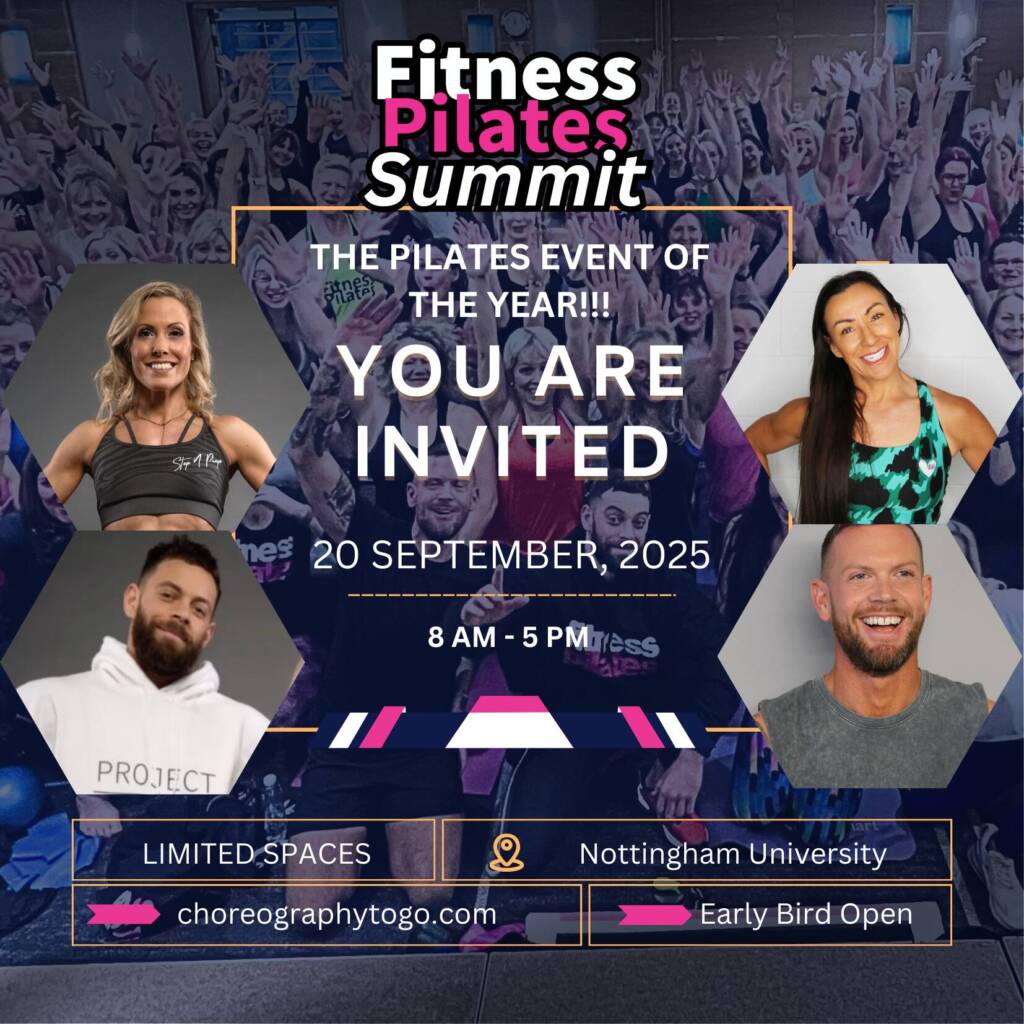
The Fitness Pilates Summit is our annual flagship event, now in its second year at University of Nottingham, taking place on 19th September.
This year, why not make a full weekend of it?
Join Kelly and myself on the Friday at my private studio for:
• HOT Infrared Fitness Pilates Training
• Fitness Pilates Reformer Training special summit pricing
• Or both for the ultimate learning experience
• Plus, a brand new twilight masterclass to round off the day
It’s the perfect opportunity to immerse yourself, elevate your skills and connect with like-minded instructors.
For accommodation, take a look at The Orchard Hotel, located right on campus, with the Summit held at the excellent David Ross Sports Village.
We have 10 spaces for the SUMMIT left at the early bird pricing.
Share this post:
Latest Fitness Pilates Courses & Classes
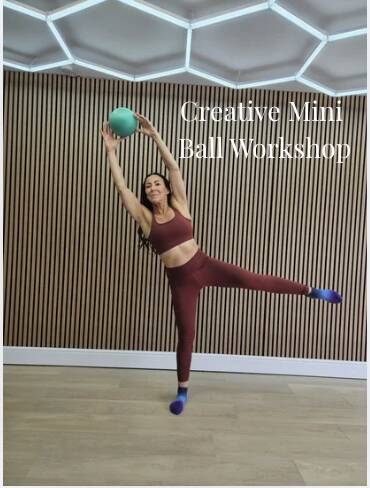
FITNESS PILATES MINI BALL CREATIVE FLOW MASTERCLASS
£25.00 Original price was: £25.00.£20.00Current price is: £20.00.
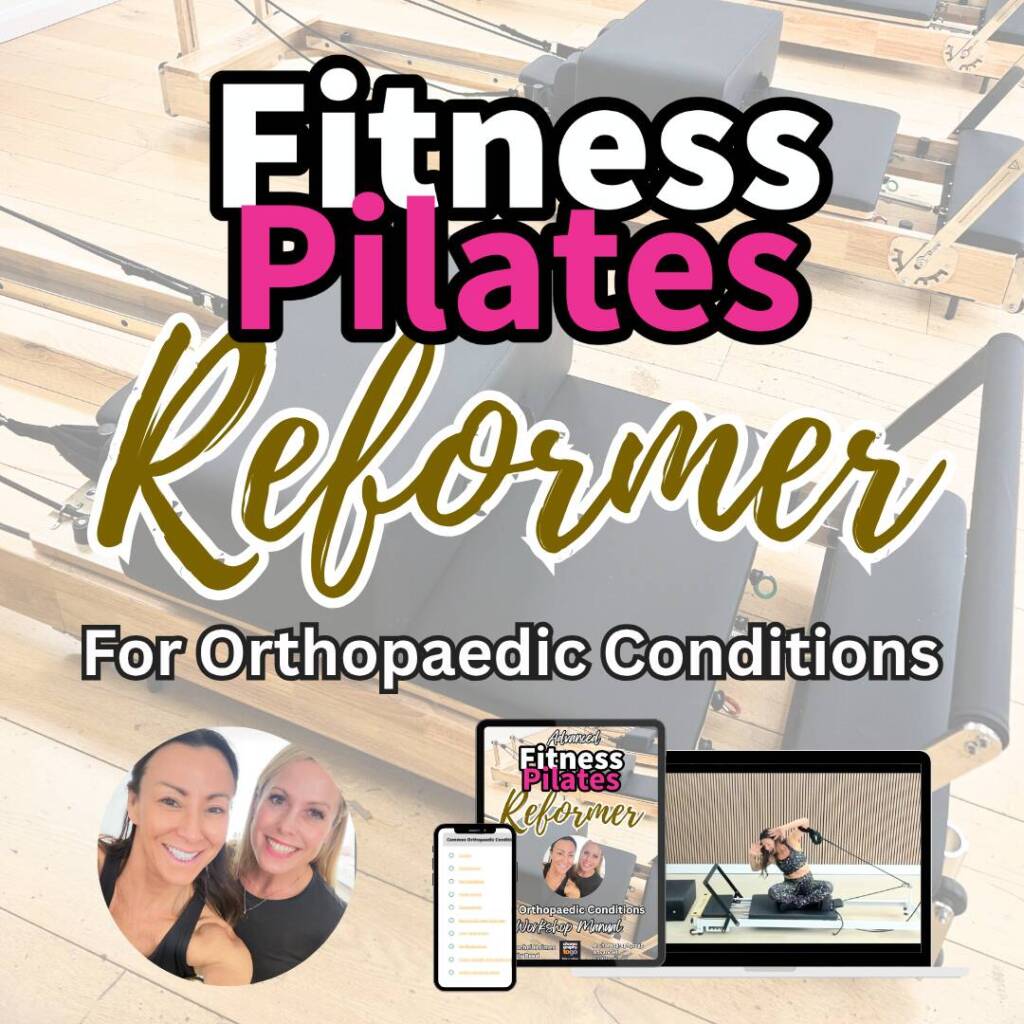
Reformer For Orthopaedic Conditions Workshop
£199.00 Original price was: £199.00.£127.00Current price is: £127.00.
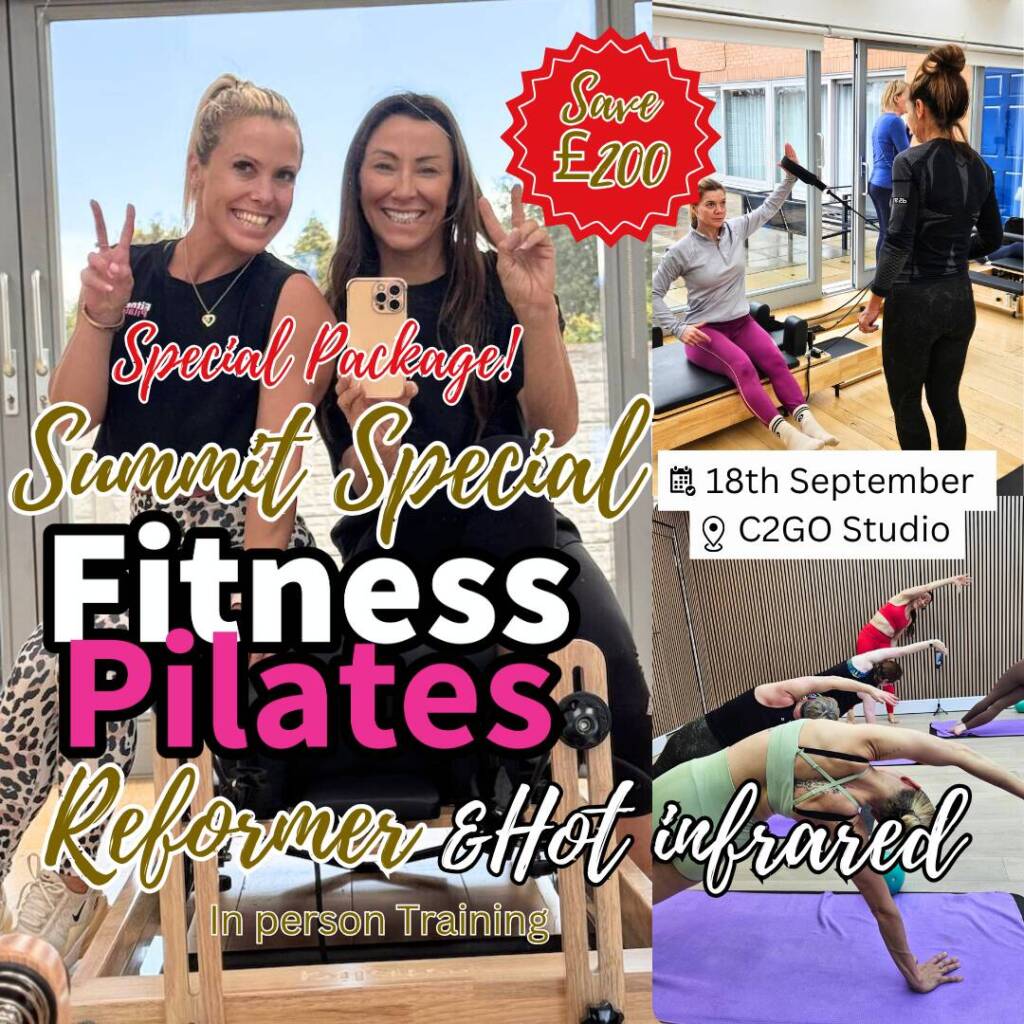
Reformer Fitness Pilates + Hot Fitness Pilates Instructor Certification Live PACKAGE SUMMIT SPECIAL 18th SEPTEMBER
£1,094.00 Original price was: £1,094.00.£799.00Current price is: £799.00.
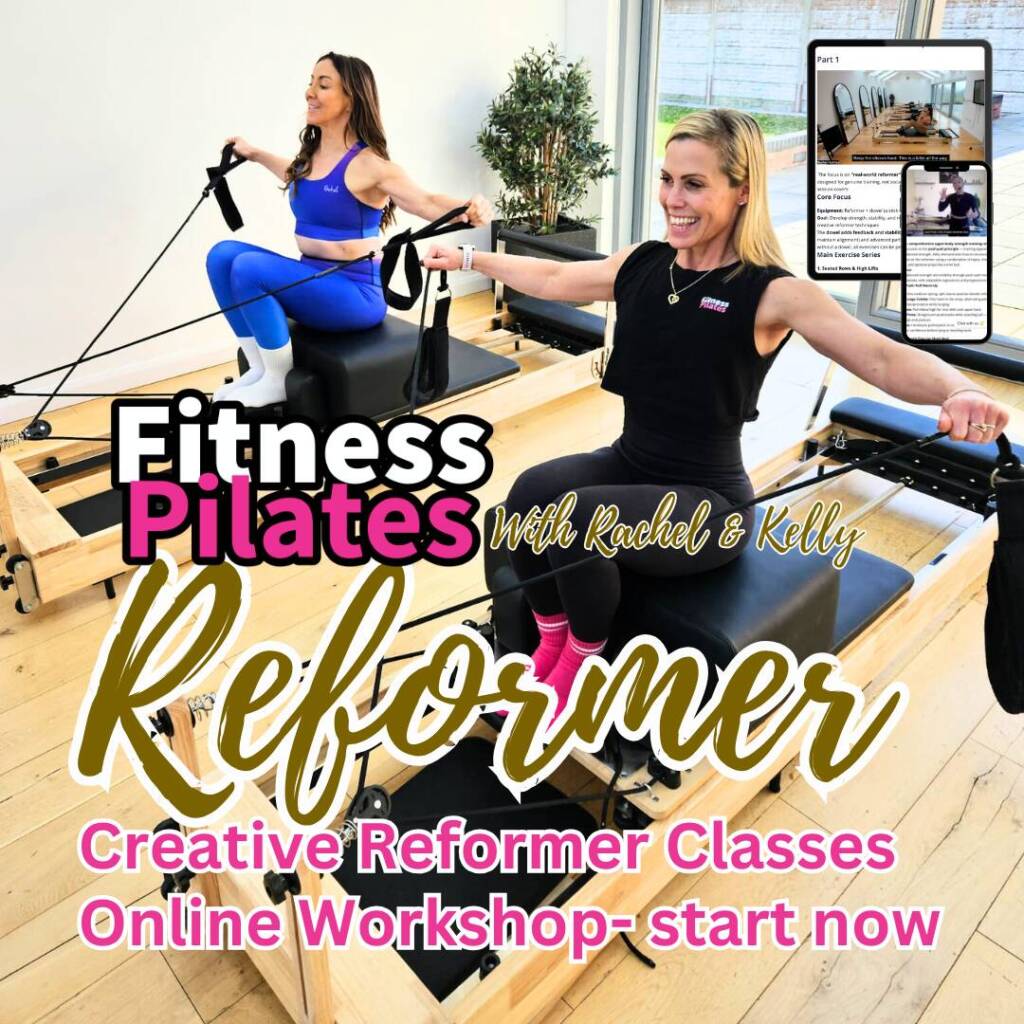
Creative Reformer Classes – Online Workshop
£75.00 Original price was: £75.00.£60.00Current price is: £60.00.
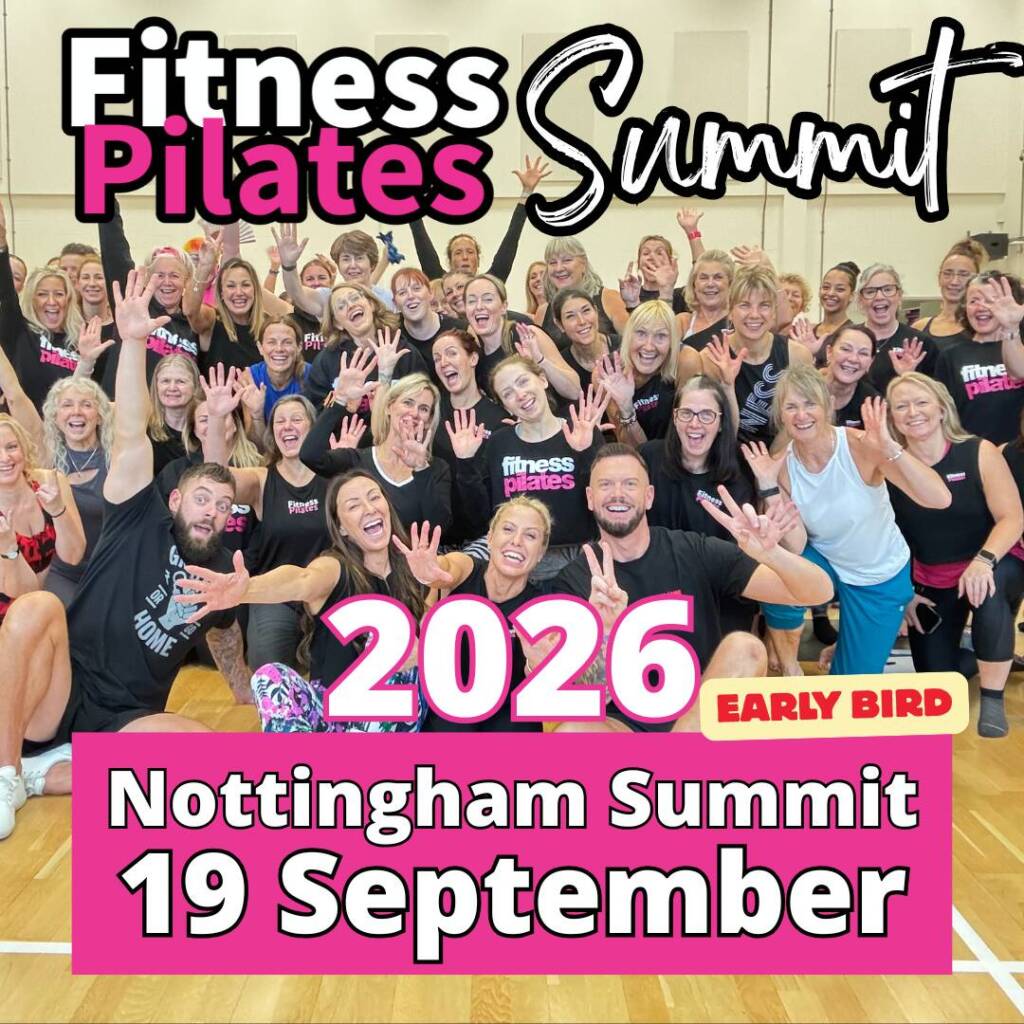
Fitness Pilates Summit Event 2026 EARLY BIRD TICKETS
£127.00 Original price was: £127.00.£99.00Current price is: £99.00.


The latest Fitness Pilates blogs & news


Join the Fitness Pilates newsletter
A short description introducing your business and the services to visitors.