How to Fill Your Fitness Classes Consistently (Without Posting on Social Media Every Day)
How to Fill Your Fitness Classes Consistently (Without Posting on Social Media Every Day) If you’re a fitness instructor, Pilates teacher, PT or studio owner,


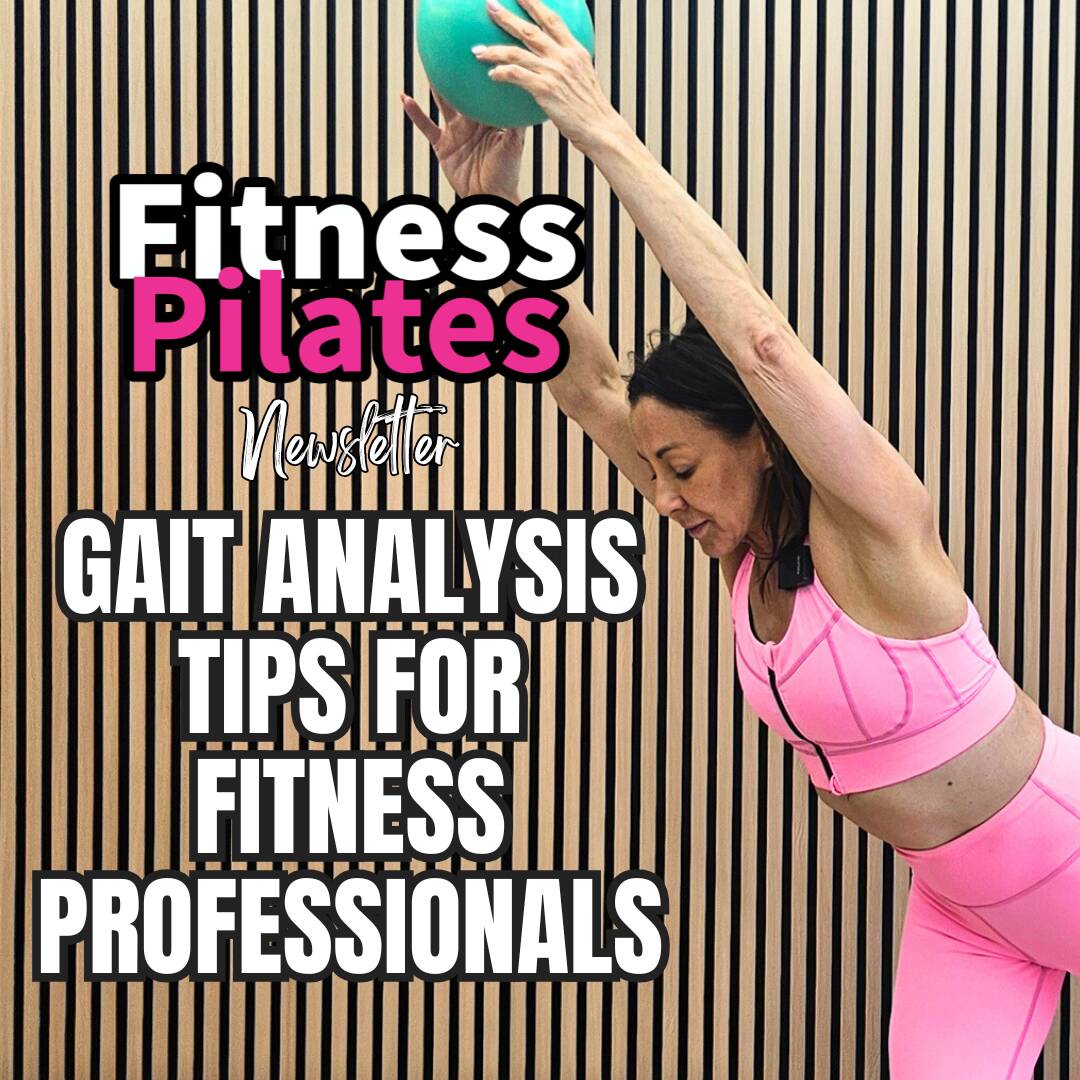
Last week in the newsletter we explored core testing, and as we’re delivering the Level 4 Pilates qualification over the next few weeks, I thought it would be the perfect time to talk about gait analysis — and how you can integrate simple, effective exercises to improve gait within your mat and Reformer classes.
March is an incredibly busy month for us. We have:
All the details are below.
Gait Analysis Tips for Fitness Professionals
Gait analysis doesn’t need to be complicated or clinical to be powerful in your classes. Even a simple observational screen can give you huge insight into posture, core control, glute function and movement efficiency.
Here’s a practical breakdown you can use immediately.
Understand the Basic Phases of Gait
The walking cycle has two main phases:
Stance phase (about 60%)
Swing phase (about 40%)
If you can recognise heel strike, mid-stance and toe-off clearly, you’re already ahead.
What to Observe (From the Side)
Posture – Is the head forward? Rib flare? Excessive lumbar extension?
Stride length – Overstriding or very short steps?
Heel strike – Soft or heavy?
Hip extension – Does the leg move behind the body or stay short?
Arm swing – Symmetrical and relaxed?
Red flags:
What to Observe (From the Front & Back)
Pelvic stability – Does one hip drop? (Trendelenburg sign)
Knee tracking – Do knees collapse inward?
Foot position – Overpronation or excessive supination?
Arm symmetry
Shoulder height differences
The 5 Quick Gait Checks You Can Do in Class
Sometimes you hear dysfunction before you see it.
Common Issues & What They Often Indicate
| Observation | Possible Cause | Pilates Focus |
| Hip drop | Weak glute med | Side-lying work, standing abduction |
| Overpronation | Poor foot intrinsic strength | Foot doming, balance work |
| Reduced arm swing | Thoracic stiffness | Rotation & mobility |
| Short stride | Tight hip flexors | Lunge matrix, hip extension drills |
| Heavy heel strike | Poor shock absorption | Eccentric control training |
How to Integrate Into Your Classes
Instead of labelling it “gait analysis”, simply:
Advanced Tip (For Reformer Teachers)
On Reformer:
Reformer is a brilliant gait assessment tool.
Keep It Simple
You are not diagnosing.
You are observing patterns.
You are improving movement quality.
The goal is:
Better alignment
Stronger propulsion
Improved stability
Reduced compensations
Hope that inspires you this week!
Much Love Rachel
Whats app 07976 268672
I have been filming a weekly vlog on Youtube as an experiment check it out here
If you’d like support with marketing, sales, social media, and business growth, you’re very welcome to join my Supporters Group.
Click here to find out more.
Join the FPVIP CLUB click here
How to Fill Your Fitness Classes Consistently (Without Posting on Social Media Every Day) If you’re a fitness instructor, Pilates teacher, PT or studio owner,
We are excited to announce that all Pilates and Reformer qualification dates are now confirmed right through to the end of the year. Whether you
Yoga block tabata Lower Body Balance & Sculpt (Tabata Style) Single-leg hip abduction with cross-over Single-leg hip extension (option to add arm movements) Combination: single
So it’s been three months of daily vlogging and sharing a weekly vlog here on YouTube, and it’s been a very busy first quarter with
I hope you’re enjoying a lovely Easter break. If you are coming to the Summit, or thinking of booking for Saturday 19th September, Kelly and
Did you remember the clock change? My alarm went off far too early… even for me It’s been a full-on week getting back from IFS