Choreographytogo Education: New Pilates & Reformer Course Dates for 2026
We are excited to announce that all Pilates and Reformer qualification dates are now confirmed right through to the end of the year. Whether you


SUMMIT 2026 TICKETS NOW AVAILABLE!
See the next Fitness Pilates training course dates here
See the next Reformer pilates training dates here face to face an online
See the next Level 3 Pilates dates here
Warm-up and introduction
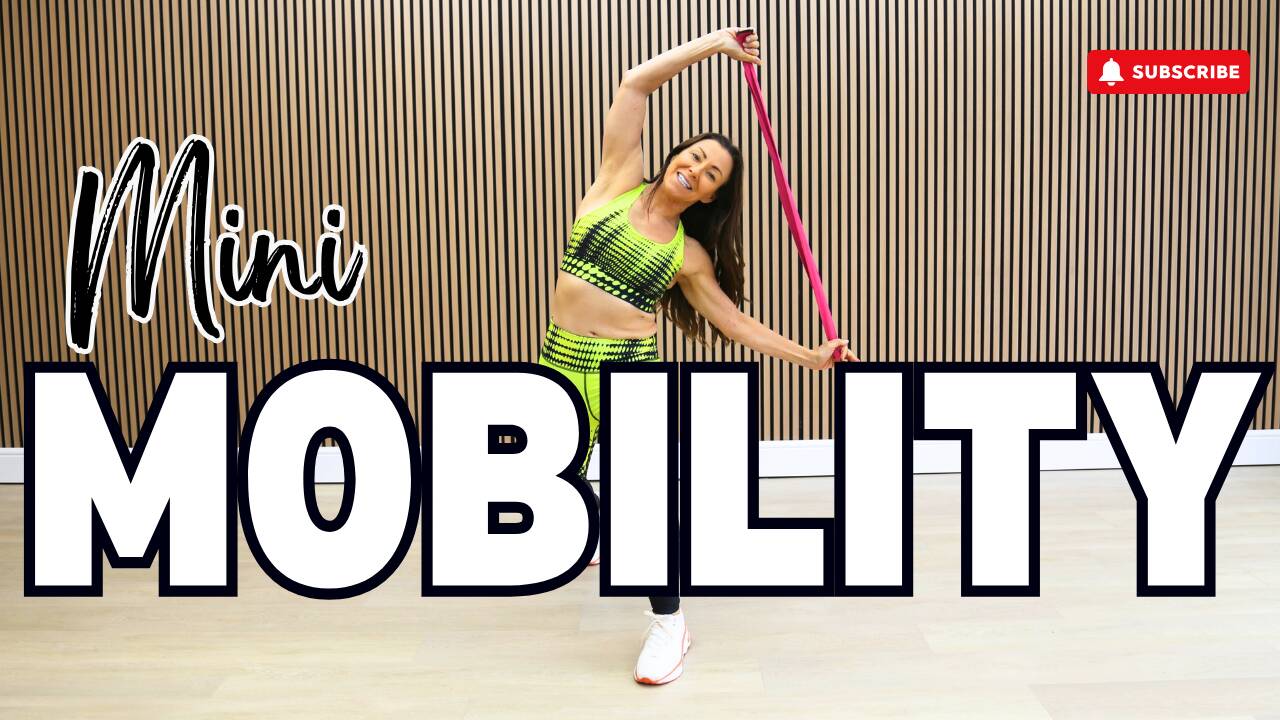
The session begins with an upbeat tone and background music as the instructor introduces “Day 1 of the Mobility Challenge.”
The focus is on performing a 10-minute mobility stretch session aimed at increasing joint flexibility and movement.
Hip mobility exercises
Starts with gentle hip circles: four circles with the right leg followed by four with the left.
Moves into a deep squat position with hands together, pushing knees apart to enhance hip range of motion.
Adds swaying from side to side while keeping the hands on the floor for deeper engagement.
Progressive hip work
Repeats circular leg motions while alternating between right and left legs.
Encourages using yoga blocks if squatting deeply feels uncomfortable.
Introduces internal and external rotations for balance and complete hip mobility.
Dynamic movement combinations
Combines forward and backward leg swings with abduction and adduction (side-to-side) motions.
Integrates balance work by keeping the pelvis stable during leg movements.
Repeats exercises on both sides for symmetry and strength.
On-the-floor mobility drills
Demonstrates kneeling hip movements on yoga blocks—moving knee forward, back, and to the side.
Circles the hips for internal and external rotation, then switches sides.
Seated 90/90 hip rotations
Uses yoga blocks for upper body support while performing 90/90 seated hip rotations.
Progresses from alternating one leg at a time to moving both legs together for advanced mobility.
Closing notes
Encourages participants to incorporate mobility work into their weekly routines or create short mobility clips for social media.
Suggests daily focus areas like hips, knees, spine, shoulders, and ankles.
Ends with an invitation to access choreography notes and continue following the mobility series.
Introduction and setup
The instructor introduces the mini ball as a versatile tool for fitness, Pilates, and posture conditioning.
The routine features a quick series of movements ideal for short or express classes.
Supine tabletop work
Begins in a tabletop position, pressing the core down and tapping one foot at a time to the floor.
Progresses to opposite arm and leg extensions for coordination and balance.
Adds variations with longer leg extensions and arms lifted off the mat for increased challenge.
Bridge with ball between knees
Places the ball between the knees to engage inner thighs while performing pelvic tilts and bridge lifts.
Arms sweep overhead while rolling up and down through the spine, promoting control and spinal articulation.
Knee rolls and rotation
Knees roll side to side while maintaining tension on the ball for oblique activation.
Encourages fluid movement across each joint to enhance flexibility and mobility.
Seated roll-ups and rotations
Adds momentum by hugging the knees and rolling up to a seated position.
Performs half roll-backs combined with right and left torso rotations to work the core.
Side kneeling balance work
Ball positioned under the supporting hand while lifting the top arm and leg to strengthen the shoulder and hip stabilizers.
Focuses on maintaining balance and joint alignment.
Forearm plank on the ball
Forearms rest on the ball in a plank hold to activate the core, shoulders, and glutes.
Emphasizes maintaining body tension and proper alignment.
Prone upper-body activation
Ball placed under the chest; lifts arms in single and double repetitions to strengthen upper back and scapular muscles.
Concludes with arm extensions and forward pushes to improve posture and spinal control.
Closing and cooldown
Ends with a light stretch and encouragement to try the sequence at a slower pace for teaching or practice.
Mentions upcoming Pilates classes and encourages viewer engagement through choreography sharing.
Introduction and setup
Instructor introduces a yoga block flow inspired by a previous mini ball session.
Music used: “Mind Body Beats – Deep Work Vol. 1.”
Designed as a short, adaptable routine for fitness, Pilates, or yoga classes.
Warm-up and tabletop leg work
Begins with the sacrum resting on the block and moves into tabletop position.
Performs alternating leg taps to the floor to activate the core and stabilize the spine.
Adds leg extensions and reverse movements while maintaining core engagement.
Bridge with block between knees
Block placed between knees to engage inner thighs.
Moves into shoulder bridge with arms sweeping overhead.
Combines bridge lifts with abdominal curls for spinal articulation and coordination.
Oblique and rotation sequence
Knees move side to side in tabletop to activate the obliques.
Progresses into half roll-backs and rotations, maintaining tension on the block for control.
Seated and twist variations
Uses the block as a focus point during roll-ups.
Crosses ankles and rotates spine using the block for alignment and stability.
Hip mobility series
Places block behind one knee for knee flexion, hip flexion/extension, abduction, and circular motions.
Repeats on the opposite side to balance mobility and strength.
Kneeling balance and hip flexor stretch
Kneels on the block while lifting one arm overhead to challenge balance.
Moves into a deep hip flexor stretch and switches sides.
Prone back extension flow
Lies prone using the block for swan variations.
Engages glutes, quads, and scapular muscles to lengthen the spine.
Final block mobility and extension
Performs block passes behind and in front of the body to mobilize shoulders.
Finishes with gentle spinal extensions and forward stretches.
Closing remarks
Emphasizes creating 10-minute mini sessions combining mobility, strength, and posture work.
Mentions upcoming Pilates classes and offers access to choreography notes.
Dirty 30 format: three exercises performed for 30 seconds each (or 40 seconds on some tracks).
Music tempo: 128 BPM (from HIT 28 album).
Can be structured as step, upper body, lower body, or mixed intervals.
Flexible for all fitness levels: low impact, strength, or conditioning focus.
Three Basics + One Knee Lift
Perform three basic step-ups followed by one knee lift.
Repeat sequence for 30 seconds.
Low-Impact Option:
Replace steps with march or walk forward and back.
Progression:
Add power by using risers or increasing pace.
Squats with Band Resistance
Place resistance band above knees.
Perform three pulses at the bottom, then one full squat.
Add a hip abduction (side leg lift) after each squat.
Lunge with Hip Extension
Stand on band with front foot.
Step back into a lunge, then lift back leg to extend hip.
Alternate sides for glute and leg engagement.
Lateral Band Step or Shoulder Raise
Step side to side with tension on the band or hold it for lateral shoulder raises.
Maintain control to avoid snapping the band.
Walk or Jog Forward + Two Lunges
Move forward, perform alternating lunges, then return.
Double Lunge Right and Left
Two lunges each side before returning to standing.
Single Lunges or Pulse Variations
Add tempo or pulse work for intensity.
Equipment: optional step, long resistance band, or dumbbells.
Suited for conditioning or circuit-style classes.
Can be adapted for Pilates, strength, or “Lift Lean” formats.
Music suggestions: Pure Energy Music App (HIT 28).
Warm-up introduction and setup: The instructor starts with a friendly greeting and mentions previous strength and yoga-based workouts before transitioning to a quick low-impact cardio session.
Music and preparation: The workout is set to “Aerero Energy No. 8,” with encouragement for participants to follow along and feel inspired by the rhythm.
Grapevine series: Begins with standard grapevines, then progresses to forward and backward grapevines forming a “diamond” shape, followed by walking forward with knee lifts and lunges.
Box step routine: Adds a box step forward and backward, followed by a crossover and a reverse box. The movement is continuous, emphasizing rhythm and balance.
Step tap and transition: Incorporates step taps and chassé to keep the energy flowing, maintaining the right-left coordination throughout.
Knee and mambo sequence: Moves to single knees, repeaters, and mambo cha-cha combinations. The instructor suggests adding front and back knees for variation.
Routine recap and layering: Combines all three mini combos (grapevine, box step, mambo) into a cohesive choreography suitable for warm-ups or aerobic segments.
Engagement and motivation: Encourages viewers to comment for choreography notes or join YouTube classes, newsletters, and community groups.
Closure: Wraps up with thanks and reminders about upcoming 10-minute YouTube workouts, inviting teachers to stay motivated and connected.
Three simple combos: The session focuses on 3 foundational aerobic sequences that can be expanded into longer workouts.
Five-minute routine: Demonstrates how an effective choreography breakdown can fit within a short five-minute practice.
Four-grapevine diamond: Uses a four-step pattern to form the signature “diamond” move, a simple yet dynamic visual effect.
We are excited to announce that all Pilates and Reformer qualification dates are now confirmed right through to the end of the year. Whether you
Yoga block tabata Lower Body Balance & Sculpt (Tabata Style) Single-leg hip abduction with cross-over Single-leg hip extension (option to add arm movements) Combination: single
So it’s been three months of daily vlogging and sharing a weekly vlog here on YouTube, and it’s been a very busy first quarter with
I hope you’re enjoying a lovely Easter break. If you are coming to the Summit, or thinking of booking for Saturday 19th September, Kelly and
Did you remember the clock change? My alarm went off far too early… even for me It’s been a full-on week getting back from IFS
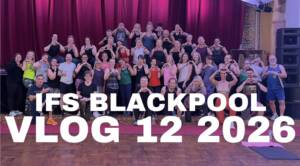
RACHEL HOLMES VLOG WEEK 12 OUT NOW This week’s vlog is a big one and gives you a real behind-the-scenes look at one of the